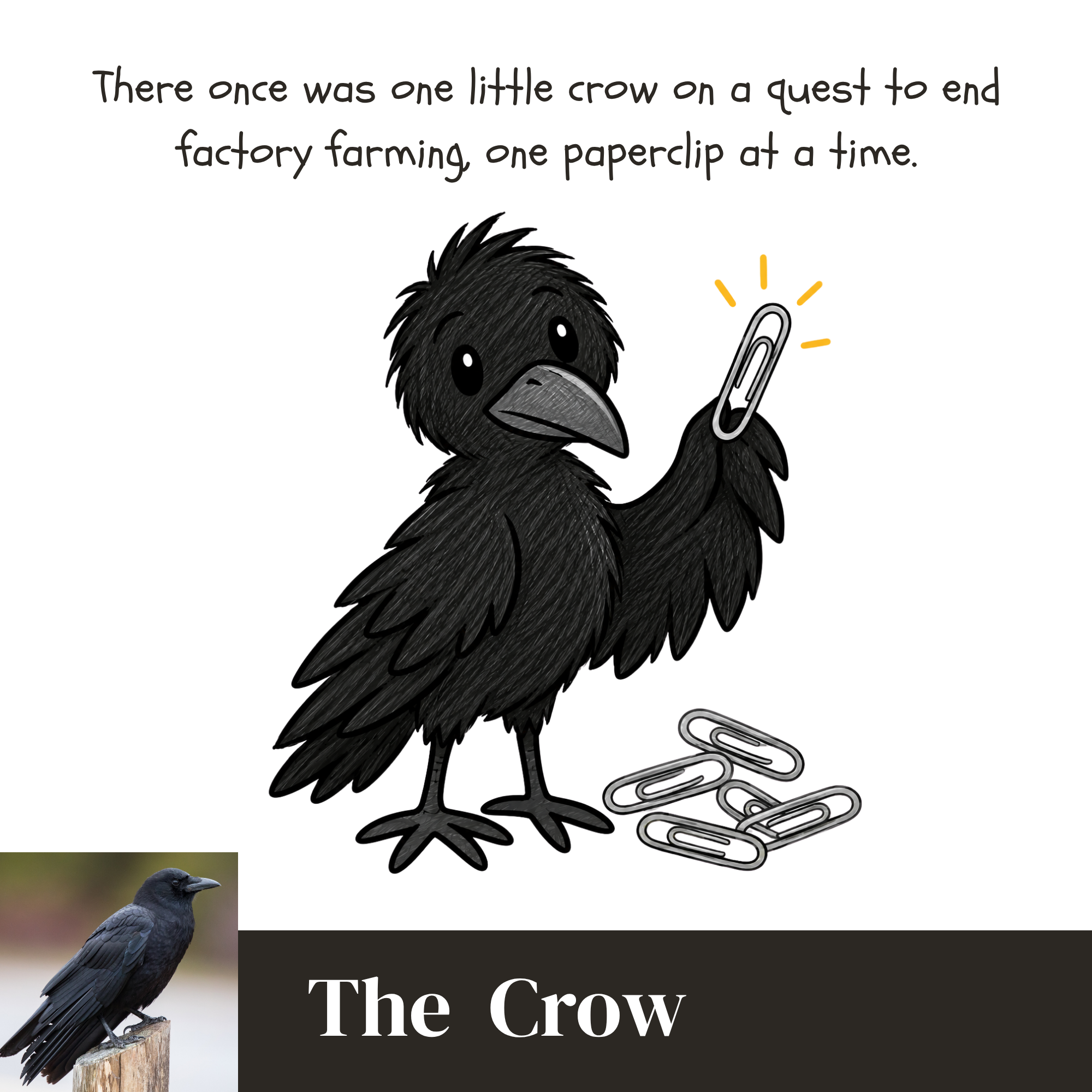
Welcome to The Crow
Meet one little crow with one very big mission: to end factory farming, one paperclip at a time. Follow along as he flies between The Office and Rainbow Connection Farm, uncovering what industrial farming gets wrong and showing us that there is always a kinder way to grow food, care for animals, and share the land.
CARE & FEEDING OF CROWS
How to Make Friends with the Crows on Your Farm
Crows aren't farm animals in the traditional sense. They're wild neighbors, and that's exactly how we treat them. If crows decide your farm is a good place to visit, you can build trust with them without trying to tame them or turn them into pets.
FOOD & WATER
One of the easiest ways to become familiar to your local crows is to offer a small amount of appropriate food in the same place and around the same time. Unsalted, unseasoned peanuts are a favorite. Fresh water is welcome too, especially during hot or dry weather. Feeding should remain supplemental—the goal is for wild crows to continue finding most of their own food.
MAKING FRIENDS
Be predictable and patient. Put out food, give them space, and don't chase or approach them. Over time, they may learn that you're the person responsible for the peanuts.
And they really can learn who you are. Research has shown that crows can recognize individual human faces and remember people they associate with threatening experiences for years. They can also respond differently to people they have learned are safe. So being kind to a crow is something a crow may actually remember.
ABOUT THOSE PAPERCLIPS...
Crows and other corvids are famously curious and may investigate unusual objects. The popular idea that crows universally collect anything shiny is exaggerated, though—individual birds have their own preferences.
That's why The Crow's paperclip is part science, part storybook. Our crow has decided that shiny silver paperclips are exactly what he wants to collect, and each one becomes a symbol of something he's learned on his quest for a kinder farm.
GIVE THEM A WILD HOME
Crows need trees for resting and nesting, access to natural foods, clean water, and a habitat with fewer pesticides and other hazards. Letting parts of your property remain a little wild can benefit crows and many other species.
Most importantly, admire them without trying to catch, handle, or domesticate them. They are wildlife, not pets.
THE PART OLD MACDONALD LEFT OUT
The farm belongs to more than the animals who live in the barn.
Crows, hawks, songbirds, insects, frogs, snakes, and countless other wild neighbors are part of the ecosystem too. Learning to farm alongside wildlife means asking how we can share the land rather than assuming it belongs only to us.
And if a crow happens to remember that you're one of the good humans?
A few peanuts probably won't hurt your reputation.
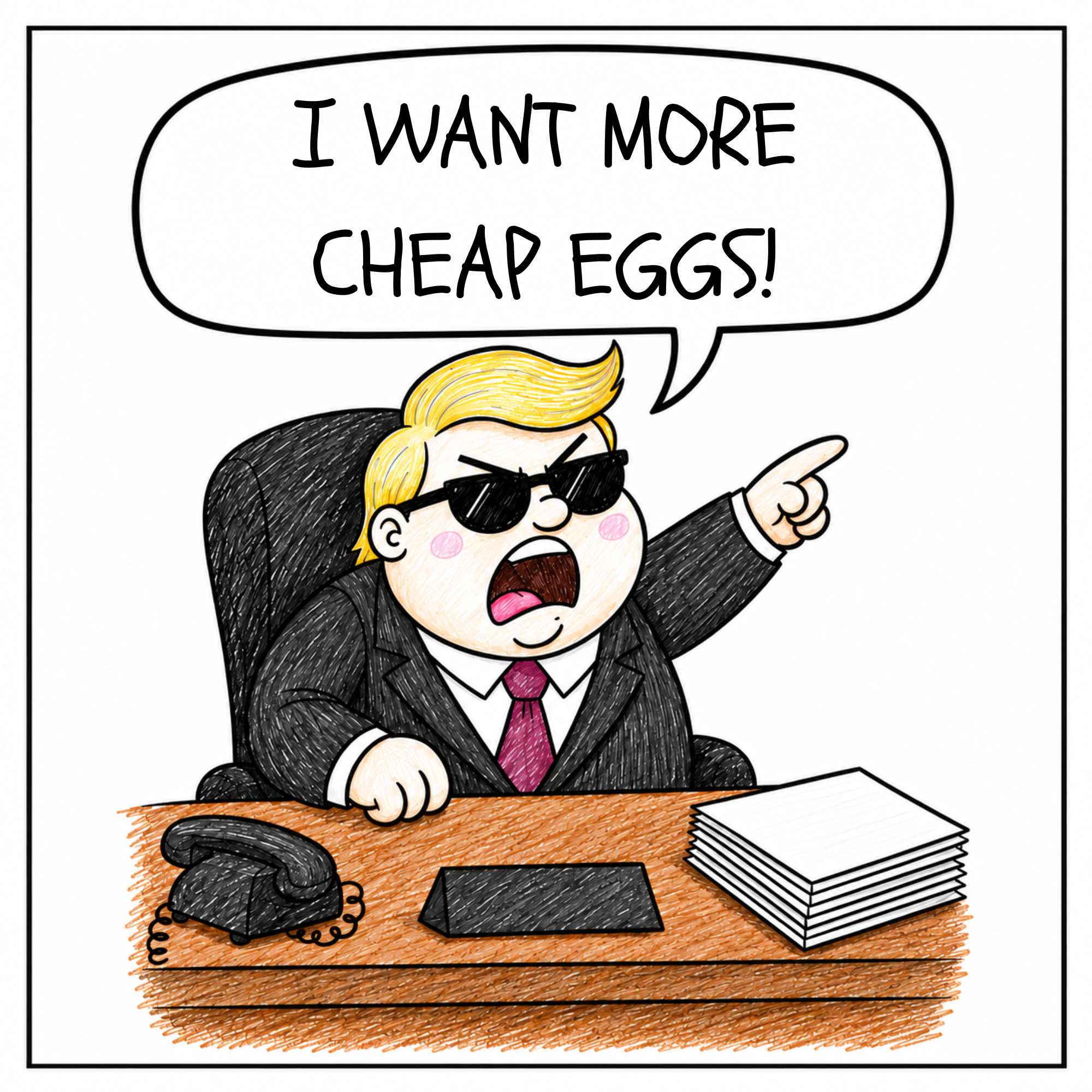
Ending Factory Farming One Paperclip at a Time: The Truth About "Cheap Bacon" (Copy) (Copy)
The exec wants more cheap corn. The crow's not having it.
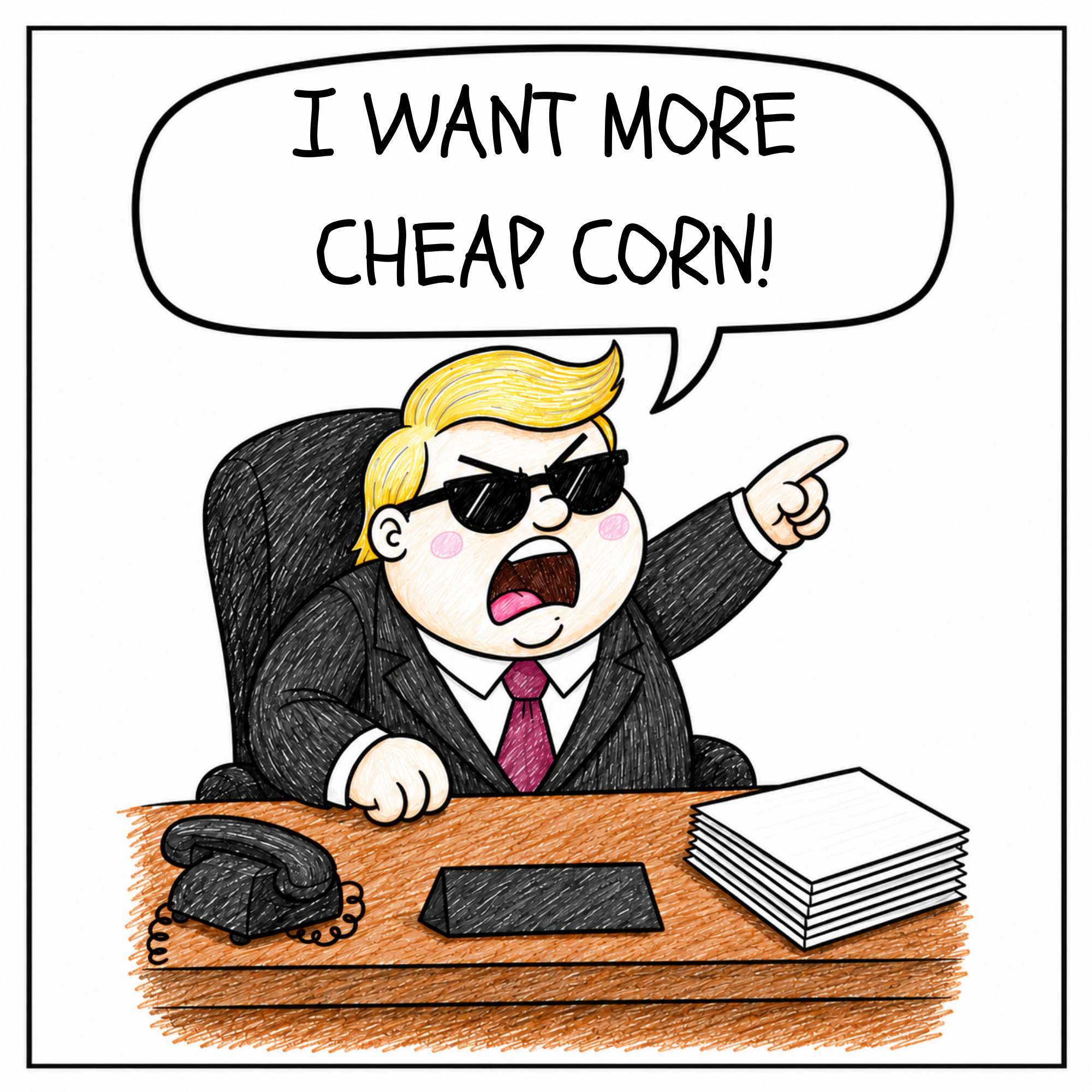
Ending Factory Farming One Paperclip at a Time: The Truth About "Cheap Bacon" (Copy)
The exec wants more cheap corn. The crow's not having it.
Most corn grown in this country never makes it to a dinner table — it's planted wall-to-wall, doused in chemicals, and fed to animals instead of people. One crop, everywhere, wearing the soil down season after season.