Ending Factory Farming One Paperclip at a Time: The Truth About "Cheap Bacon" (Copy) (Copy)
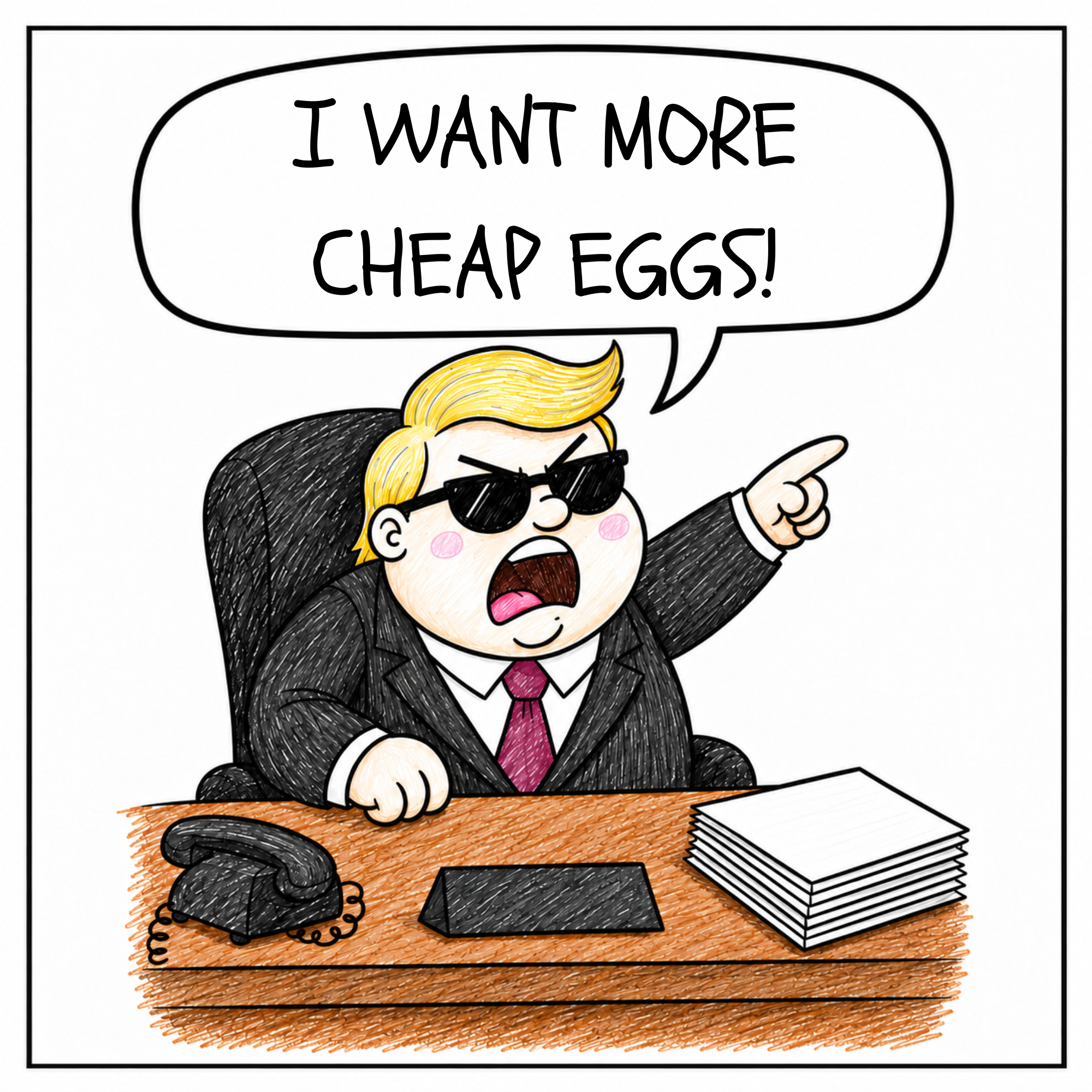
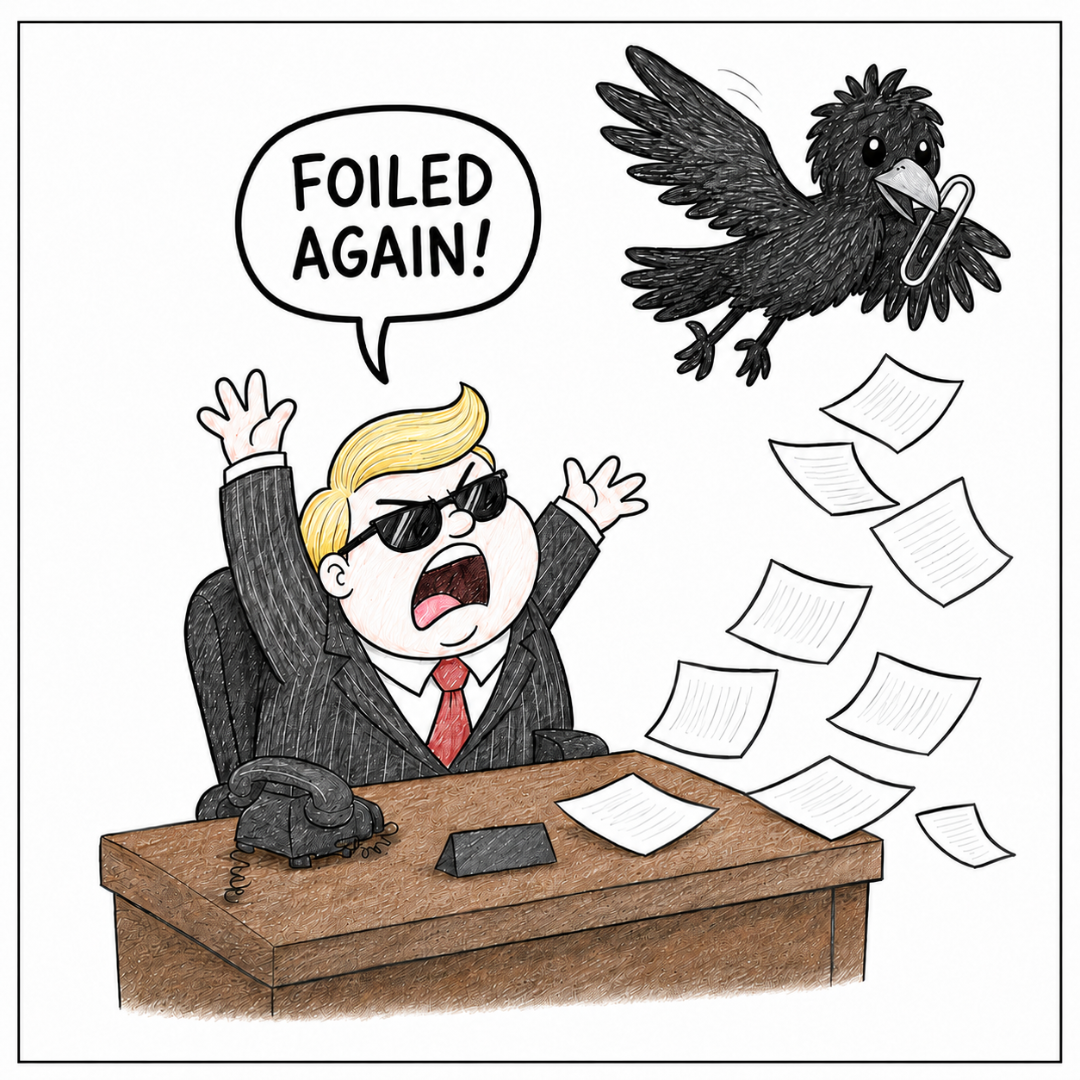
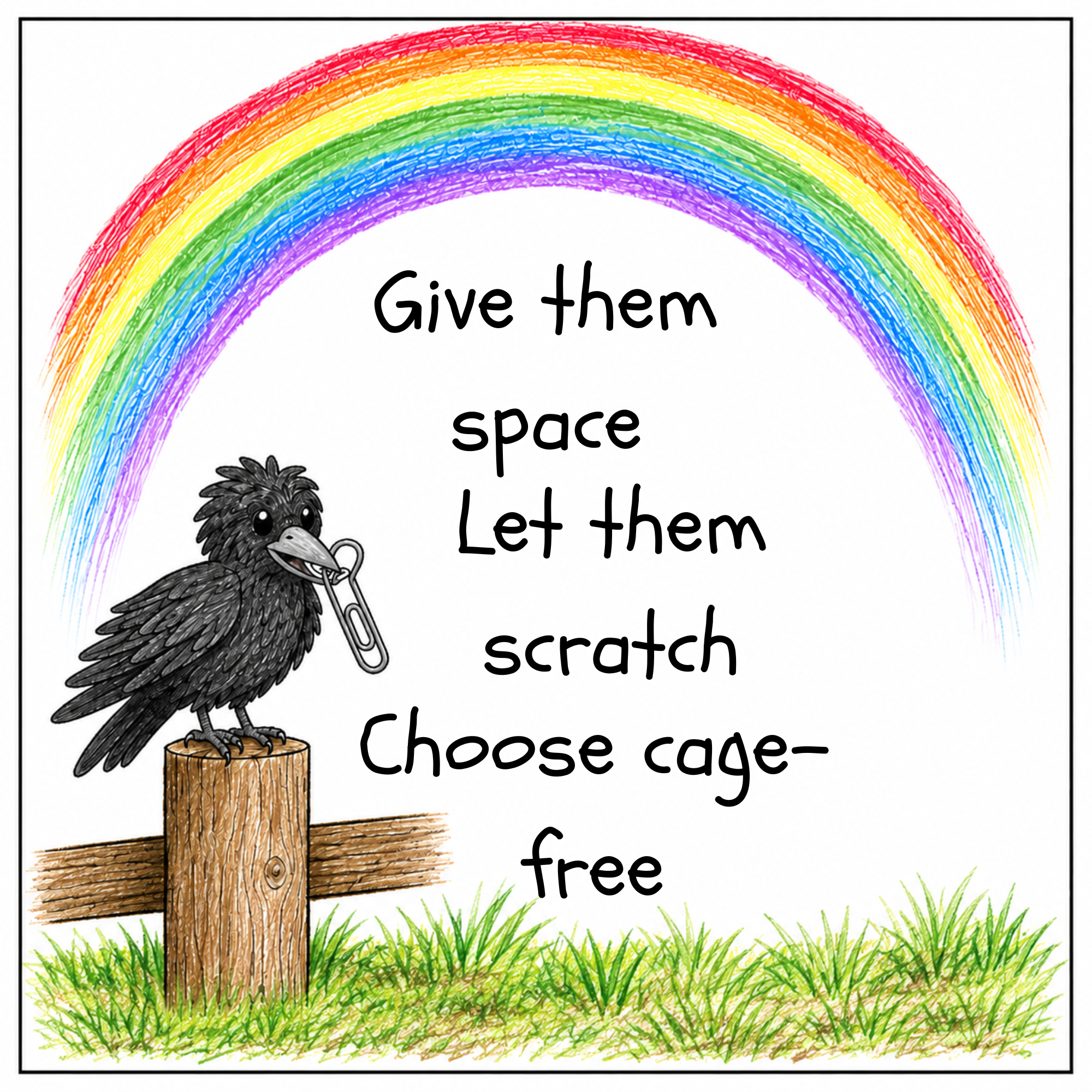
This week's Paperclip Crow comic catches our favorite thief mid-heist again, swooping in to steal the paperclip off another one of the executive's harmful plans. This time, the plan on the table was factory egg farming — and the details behind that stack of papers are worth slowing down on.
The Plan Behind the Punchline
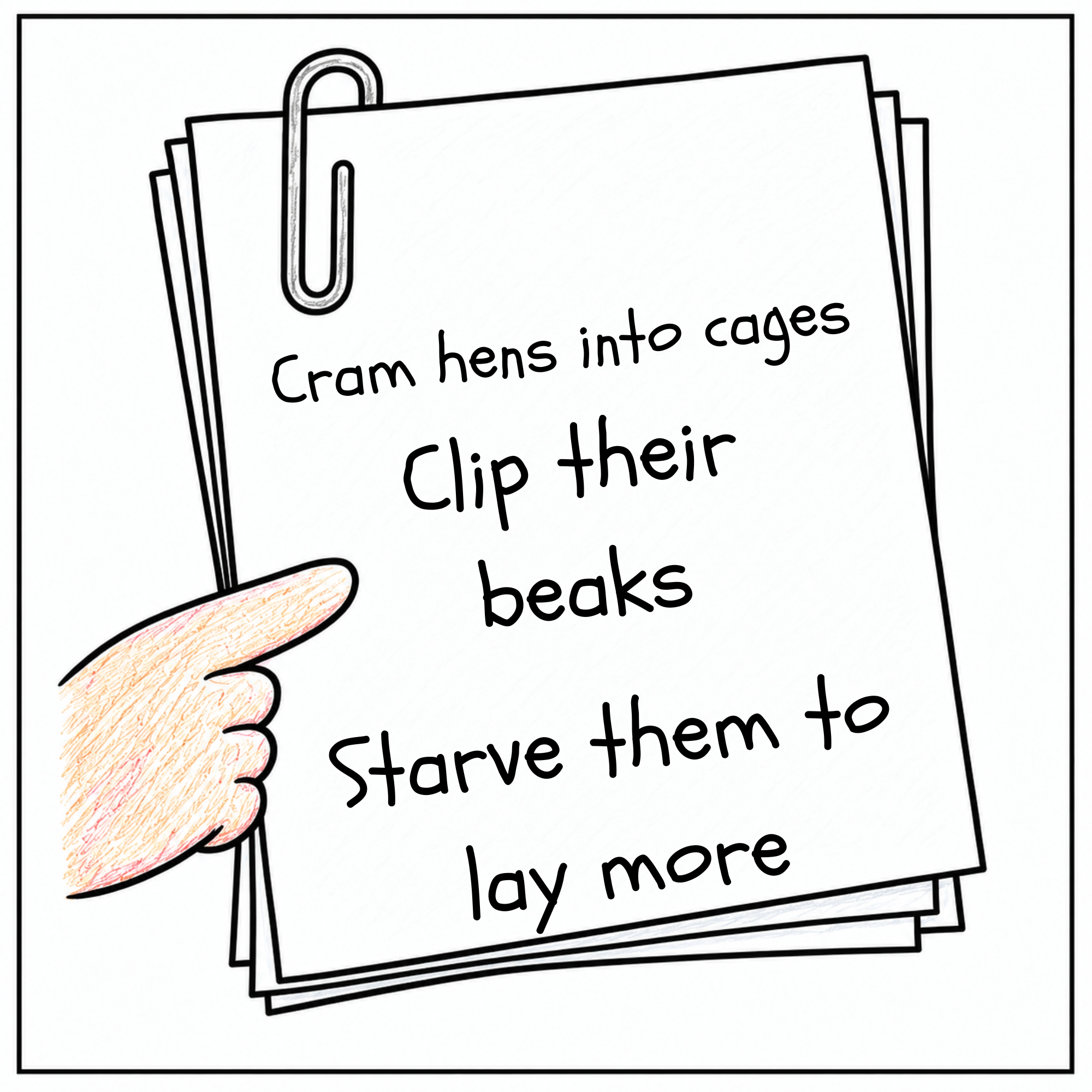
The comic is silly on purpose. A cartoon executive in sunglasses demanding "more cheap eggs" is funny precisely because it's not that far from the truth. Behind a lot of the eggs in grocery stores is a business plan with three simple, profit-driven steps: cram hens into cages, clip their beaks, starve them to lay more.
That's not exaggeration for comic effect — it's a fair summary of how industrial egg farming actually operates. Here's what those bullet points mean in real life.
Cram hens into cages. Battery cages are exactly what they sound like — wire enclosures so small a hen can't fully spread her wings, stacked in rows inside a windowless shed, sometimes holding several birds apiece.
Clip their beaks. In crowded, stressful conditions, hens can peck at each other, so many operations trim off part of a hen's beak — a sensitive body part — without pain relief, rather than fix the crowding that causes the stress in the first place.
Starve them to lay more. Some operations force molting by withholding food for over a week, which shocks a hen's body into another egg-laying cycle before her body's actually ready for one.
Why This Matters to Us
At Rainbow Connection Farm, we don't have to imagine what a different life for a laying hen looks like — we get to watch it every day. Our hens get to do what hens actually want to do: scratch, dust bathe, chase bugs, pick their own nesting spot, lay an egg when their own body says it's time, not when a schedule says so.
That contrast is the whole point of the Crow. We're not trying to make anyone feel guilty over a Sunday omelet. We're trying to pull back the curtain on a system most people never get to see, so the choices we make — big or small — are informed ones.
The Better Way
The comic ends the way it always does: not with despair, but with a nudge toward something better. A few ways to push back against the factory-farm plan, in order of how big a step they are:
Give them space. A hen who can actually move through her day is a healthier, calmer hen, full stop.
Let them scratch. Foraging isn't a bonus behavior for a chicken — it's close to a necessity for their wellbeing.
Choose cage-free — and look past it. "Cage-free" is a lower bar than most people assume. Labels like pasture-raised or Certified Humane are worth the extra look.
None of these require perfection. They just require paying attention — which, honestly, is what the crow's been doing this whole series.
One Paperclip at a Time
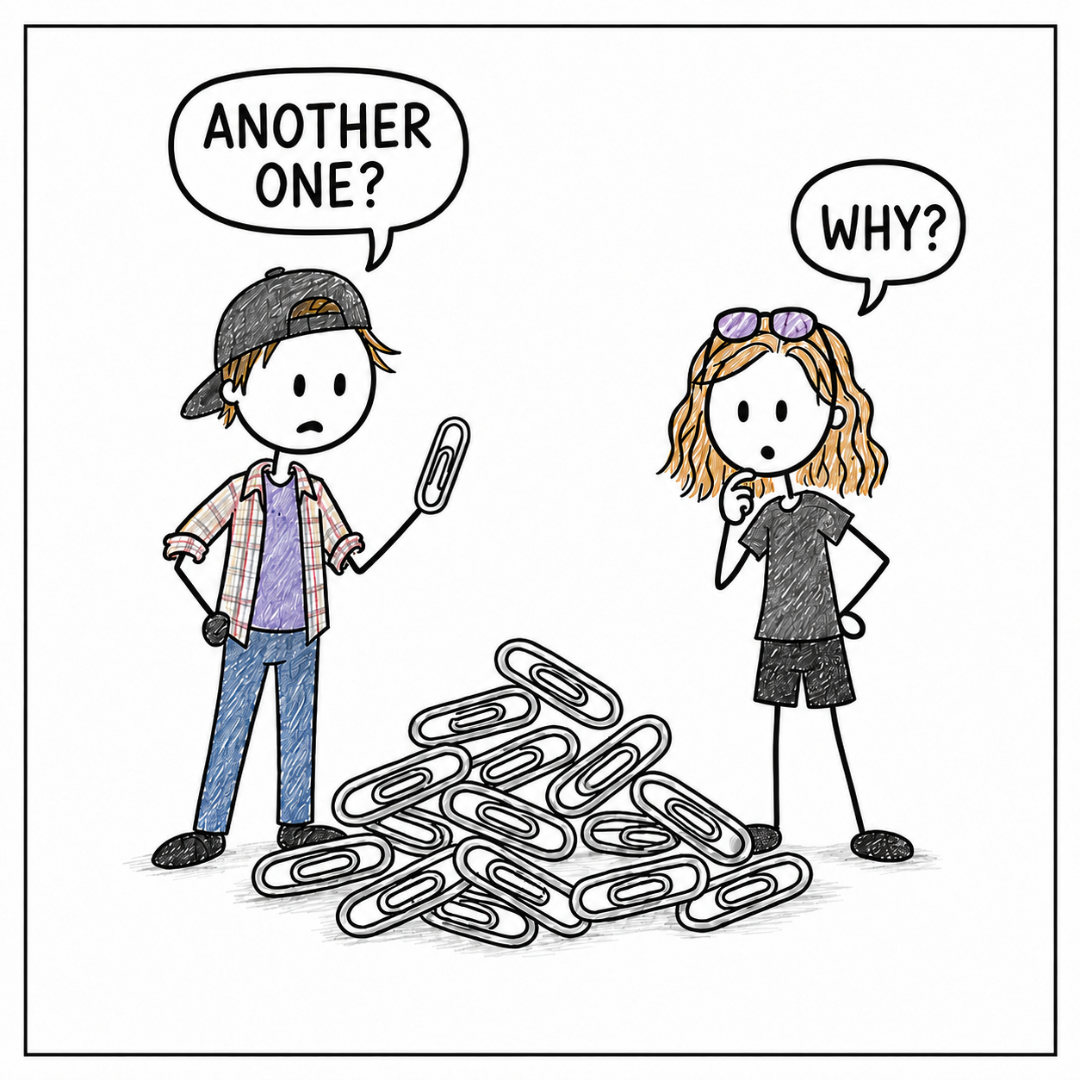
Every week, the crow steals one more paperclip off one more harmful plan. It's a small, silly image for a genuinely big idea: change doesn't have to come all at once. It comes one better choice, one informed reader, one hen with room to scratch at a time.
If this week's comic and this post gave you something to think about, that's the goal. You don't have to swear off eggs forever to make a difference — something as simple as reading past the front-of-carton language is its own small paperclip pulled from the pile.
Come by and say hi to our hens sometime — virtually, of course. They've got strong opinions about nesting spots.
#EndFactoryFarming
