Ending Factory Farming One Paperclip at a Time: The Truth About "Cheap Bacon"
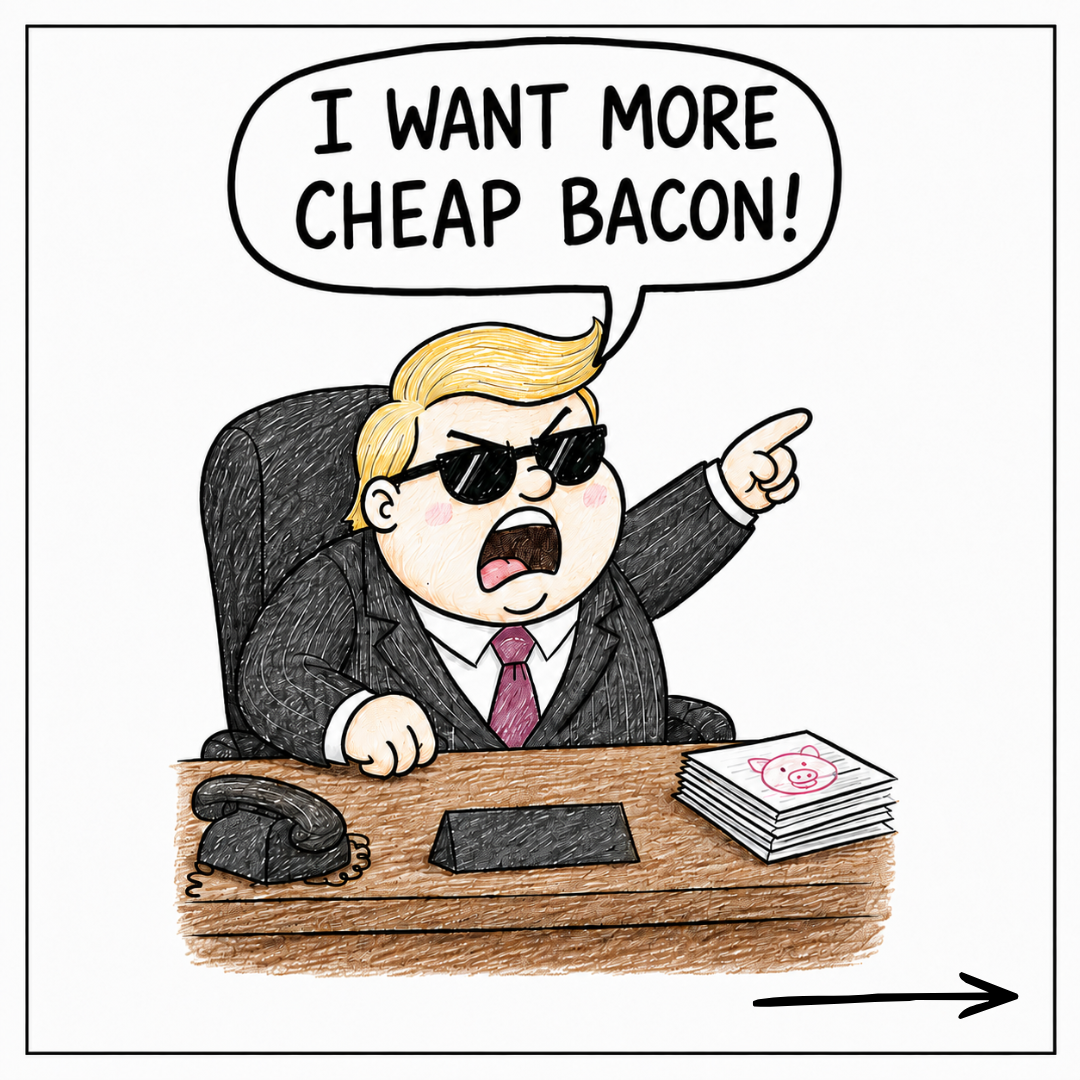
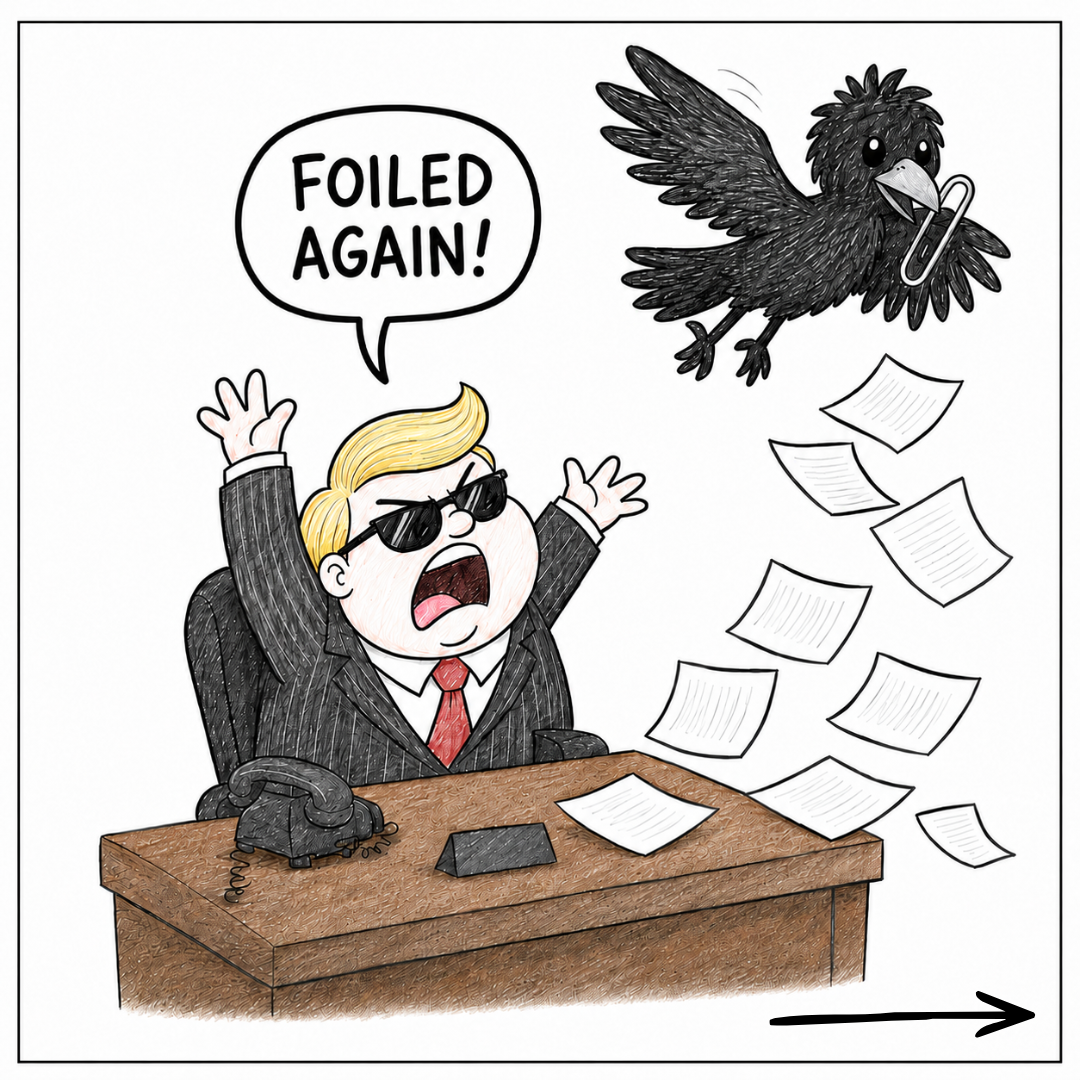
This week's Paperclip Crow comic catches our favorite thief mid-heist, swooping in to steal the paperclip off another one of the executive's harmful plans. This is the first in the series, and this time, the plan on the table was factory pig farming — and the details behind that stack of papers are worth slowing down on.
The Plan Behind the Punchline
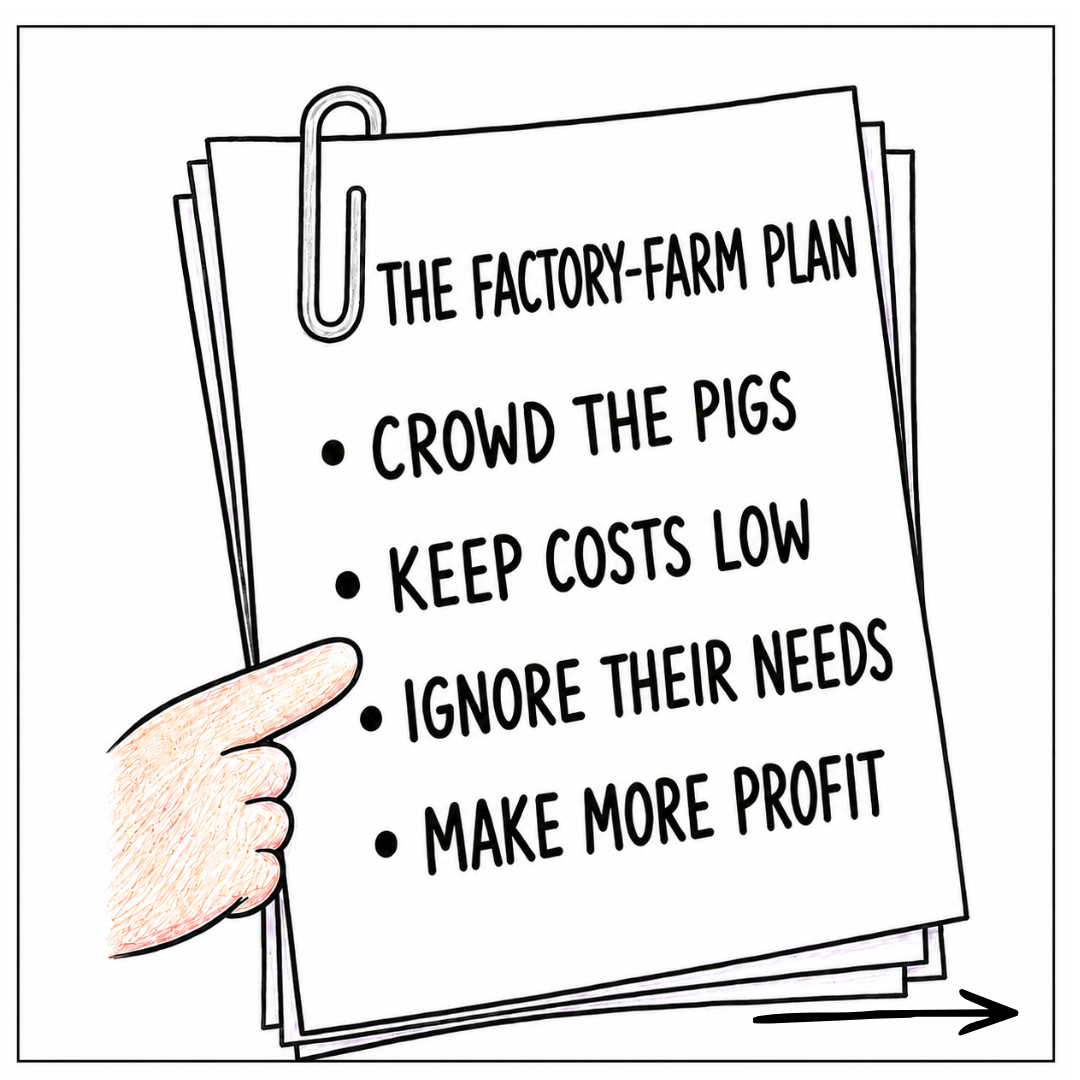
The comic is silly on purpose. A cartoon executive in sunglasses demanding "more cheap bacon" is funny precisely because it's not that far from the truth. Behind a lot of the pork in grocery stores is a business plan with four simple, profit-driven steps: crowd the pigs, keep costs low, ignore their needs, make more profit.
That's not exaggeration for comic effect — it's a fair summary of how industrial pig farming actually operates. Here's what those four bullet points mean in real life.
Crowd the pigs. Most pigs raised for pork spend their lives in concrete or slatted-floor buildings with no bedding, no outdoor access, and barely enough room to turn around. Breeding sows often live in gestation crates so narrow they can't turn in a circle — for weeks or months at a time.
Keep costs low. Efficiency is the goal, not welfare. Ventilation, temperature control, and veterinary care are all managed to the minimum standard that keeps animals alive and productive, not to the standard that lets them thrive.
Ignore their needs. Pigs are intelligent, curious, social animals. In the wild or on a good rescue farm, they root in dirt, build nests, play, and form relationships. In a factory setting, there's no space or enrichment for any of that — just floor, feed, and fluorescent light.
Make more profit. All of it traces back to the same bottom line. Cutting corners on space, comfort, and care is cheaper, and cheaper production is what keeps bacon prices low at the register.
Why This Matters to Us
At Rainbow Connection Farm, we don't have to imagine what a different life for a pig looks like — we get to watch it every day. Our pigs root around in the mud, flop over for belly rubs, chase each other across the pasture, and generally act like the individuals they are. Some of them came to us because they survived exactly the kind of system this week's comic pokes fun at. Watching them relax into a life with space, dirt, and choice is a pretty stark contrast to where they started.
That contrast is the whole point of the Crow. We're not trying to make anyone feel guilty over a BLT. We're trying to pull back the curtain on a system most people never get to see, so the choices we make — big or small — are informed ones.
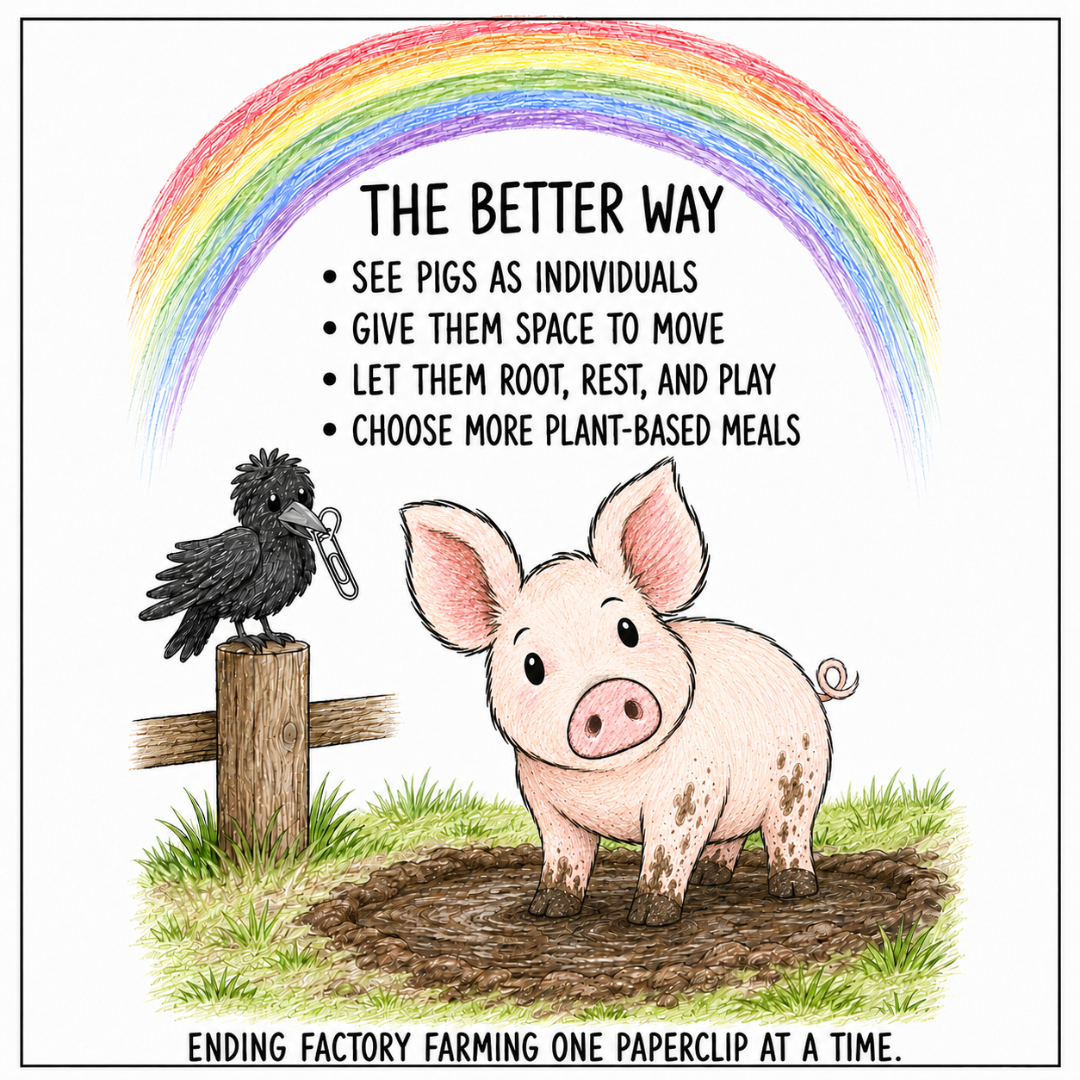
The Better Way
The comic ends the way it always does: not with despair, but with a nudge toward something better. A few ways to push back against the factory-farm plan, in order of how big a step they are:
See pigs as individuals. They have personalities, preferences, and relationships, just like dogs or cats.
Give them space to move. Whether that's supporting higher-welfare farms or advocating for better standards, space matters.
Let them root, rest, and play. Enrichment isn't a luxury for pigs — it's close to a necessity for their wellbeing.
Choose more plant-based meals. You don't have to overhaul your whole diet overnight. Even swapping a few meals a week away from factory-farmed pork adds up.
None of these require perfection. They just require paying attention — which, honestly, is what the crow's been doing this whole series.
One Paperclip at a Time
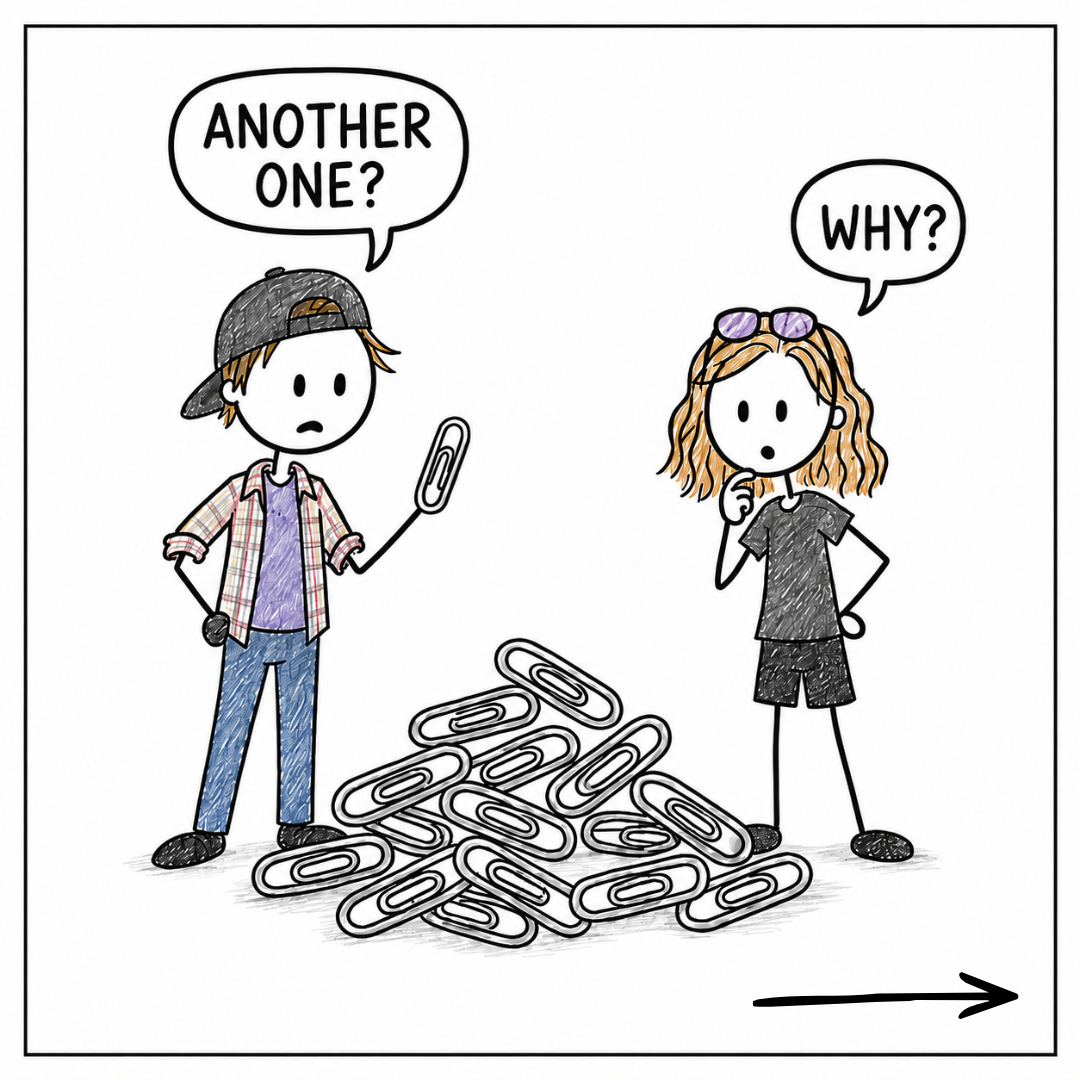
Every week, the crow steals one more paperclip off one more harmful plan. It's a small, silly image for a genuinely big idea: change doesn't have to come all at once. It comes one better choice, one informed reader, one rescued pig at a time.
If this week's comic and this post gave you something to think about, that's the goal. You don't have to swear off bacon forever to make a difference — something as simple as trying to go one month without factory-farmed pork is its own small paperclip pulled from the pile.
Come by and say hi to our own rescued pigs sometime — virtually, of course. They'd love to tell you their side of the story.
#EndFactoryFarming
