The Crow Pulls the Paperclip on Factory-Farm Feed
When we picture factory farming, we usually picture the animals. We may imagine pigs crowded into buildings, chickens packed inside sheds, or cows confined in feedlots.
But the factory-farming system begins long before animals arrive at those facilities. It stretches across millions of acres where corn and other crops are grown to feed them.
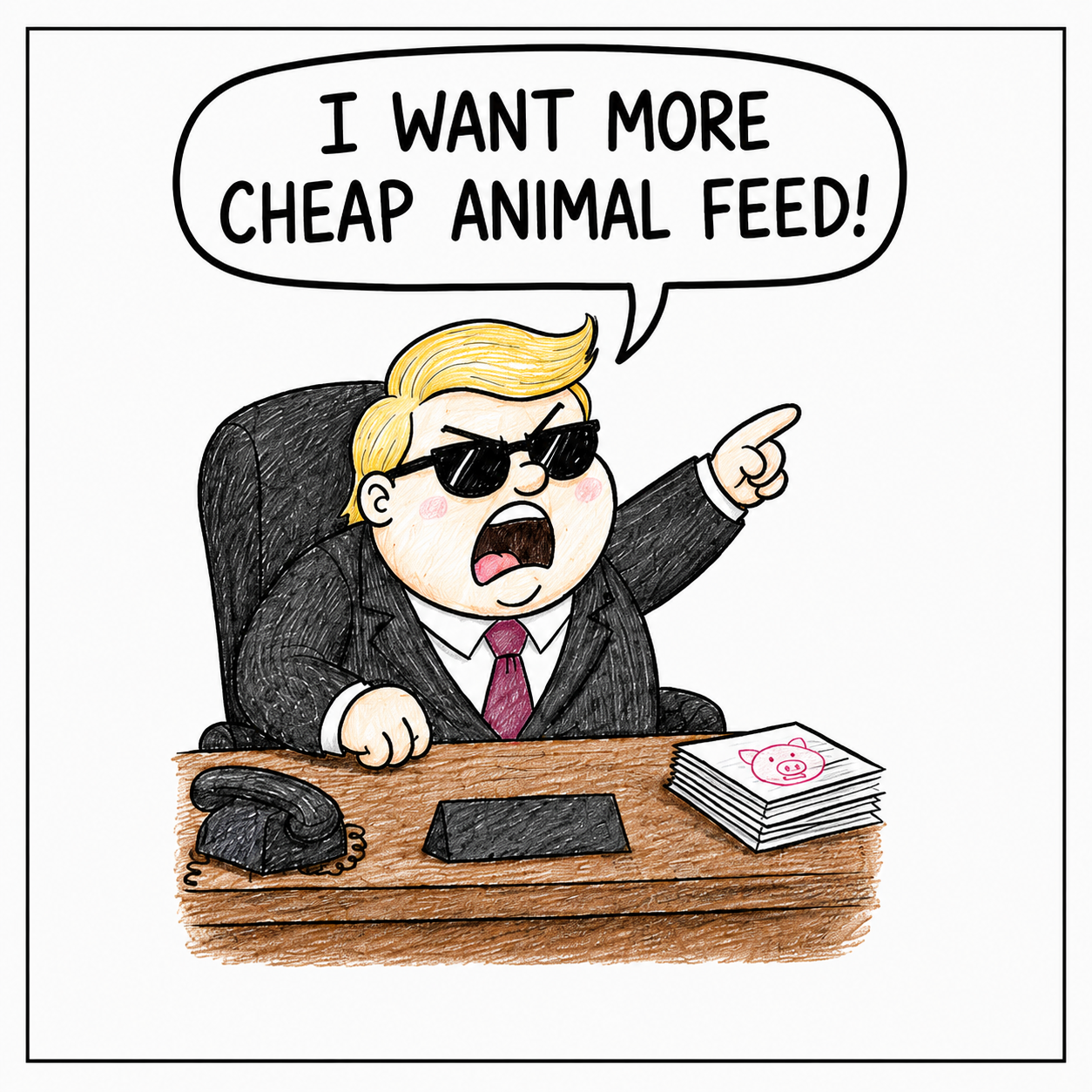
This week, the executive has issued another demand: “I want more cheap animal feed!”
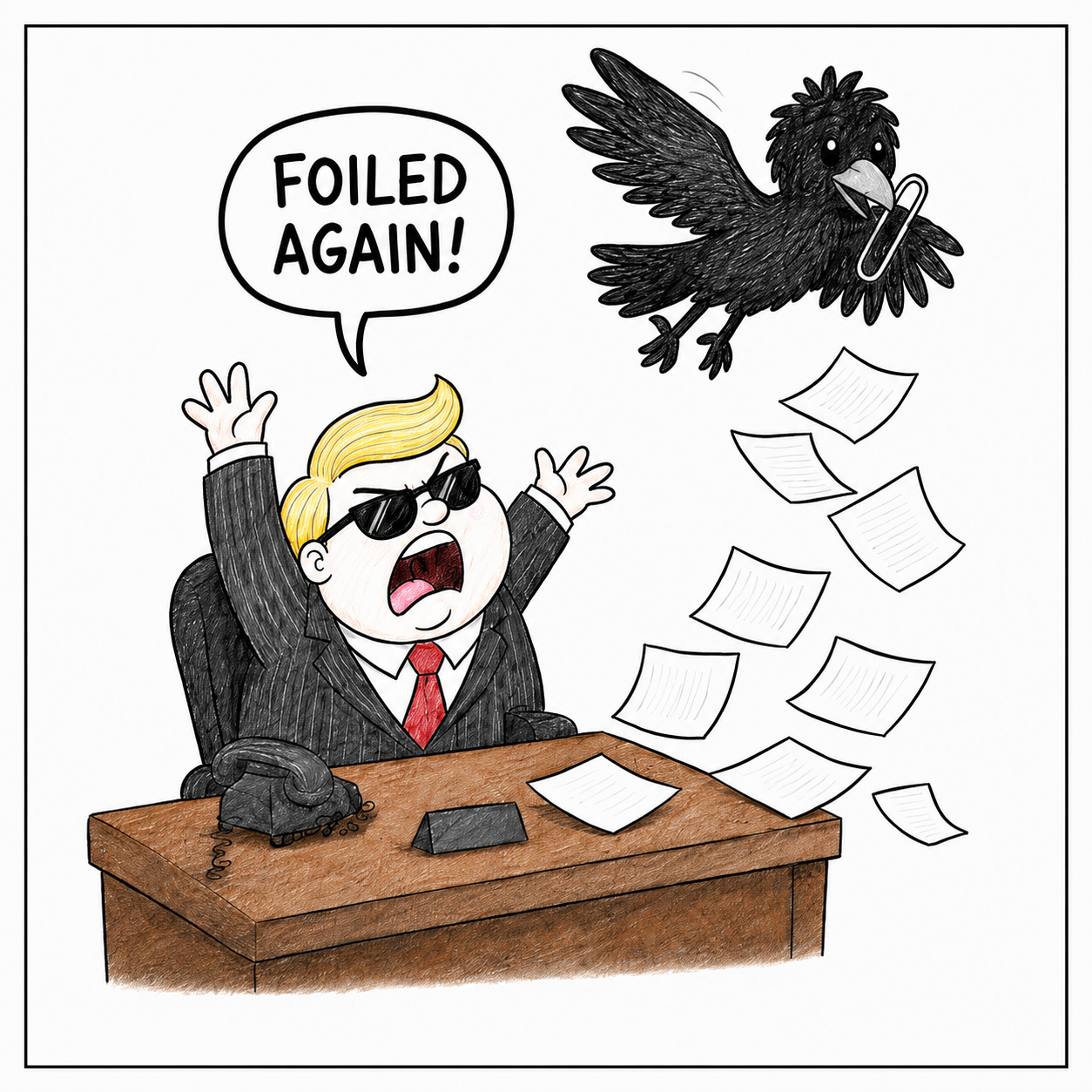
Fortunately, the Crow has found the paperclip holding his plan together.
Corn Is Not the Problem
Corn is an important and remarkably versatile crop. People eat it, farmers grow it responsibly in many different ways, and it holds deep cultural and spiritual significance for Indigenous communities throughout the Americas.
The problem is not corn. The problem is an industrial food system that demands enormous quantities of inexpensive feed so vast numbers of animals can be raised for meat, dairy products, and eggs.
Corn is commonly used as a high-energy ingredient in animal feed. Growing, processing, storing, and transporting that feed requires land, water, fuel, fertilizer, pesticides, machinery, and labor—all before we account for the resources used by the factory farm itself.
When One Crop Takes Over
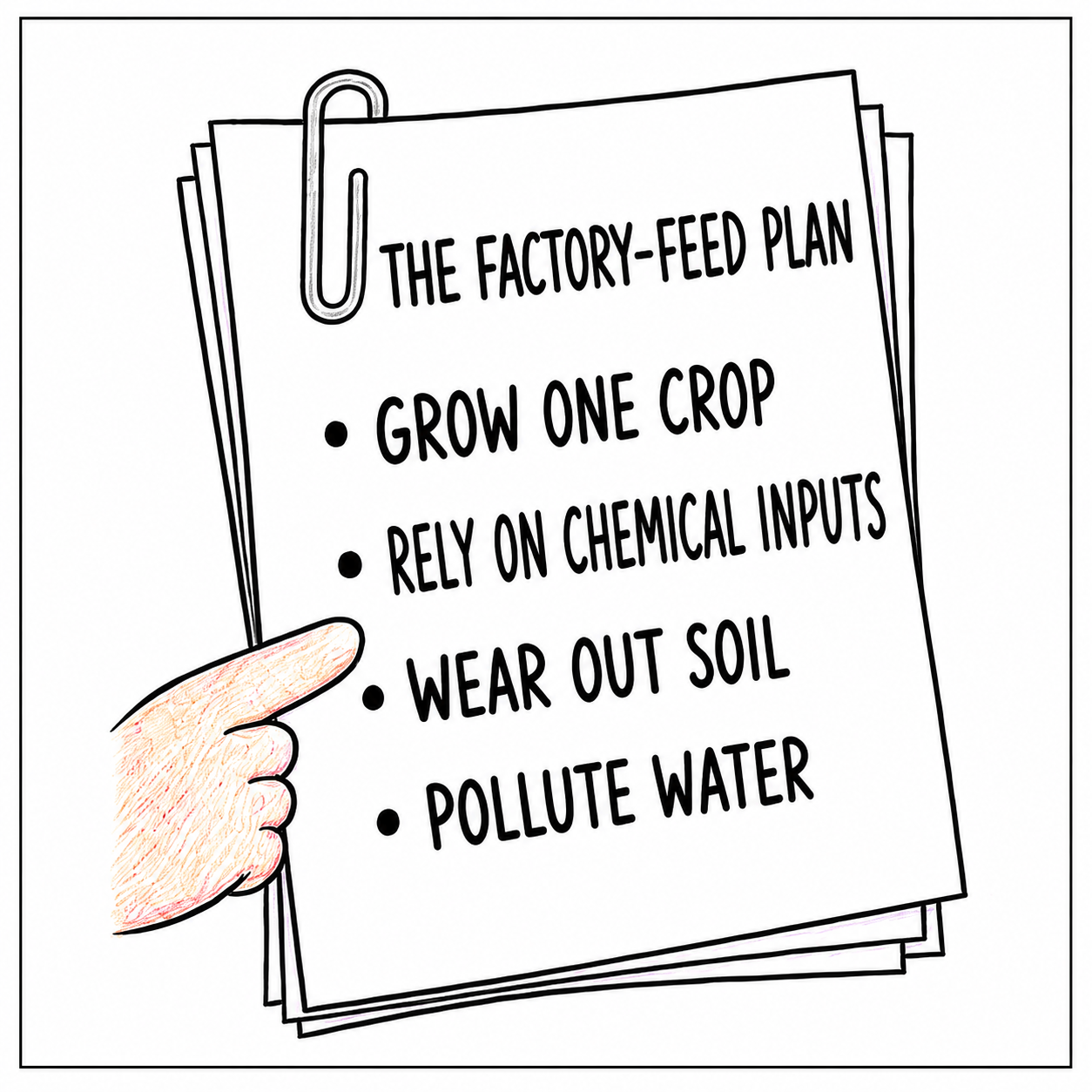
Industrial feed corn is often grown in large monocultures. A monoculture is a system in which one crop is planted across a large area, sometimes repeatedly.
This approach may make planting and harvesting more efficient, but it can also create serious environmental problems. Growing the same crop repeatedly can deplete soil and make fields more vulnerable to pests and disease. Farmers may then become increasingly dependent on synthetic fertilizers and pesticides.
Rain can carry excess fertilizer, soil, and agricultural chemicals away from fields and into streams, rivers, and groundwater. This runoff can harm aquatic life and contribute to polluted waterways far beyond the original farm.
Large single-crop fields can also replace the diverse plants that provide food and shelter for birds, pollinators, and other wildlife.
Not every farmer who grows corn follows the same practices. Many farmers rotate their crops, plant cover crops, reduce tillage, protect waterways, and work to rebuild their soil. The Crow is challenging a harmful industrial system—not blaming every individual farmer.
The Hidden Cost of Animal Feed
Farmed animals use much of the energy they consume to breathe, move, grow, maintain their bodies, and stay alive. Only some of that energy eventually becomes food for people.
As a result, growing crops to feed animals and then eating the animals generally requires more land and resources than eating plant foods directly.
This does not mean that everyone must completely change how they eat overnight. It does mean that choosing more meals made from beans, lentils, vegetables, grains, nuts, and seeds can reduce the demand for crops grown to support factory farming.
One plant-based meal may feel small, but small changes become powerful when many people make them together.
The People Behind the Crop
The harms connected to industrial feed production do not stop with soil and water. Farmworkers can be exposed to extreme heat, dangerous machinery, pesticides, low wages, and insecure working conditions.
Nearby rural communities may also experience polluted water, chemical exposure, dust, and other consequences of intensive agricultural production.
A truly compassionate food system must care about the people who plant, tend, and harvest our crops—not only the price of the finished product.
A Better Way to Grow
At Rainbow Connection Farm, we believe agriculture should work with the land rather than exhausting it.
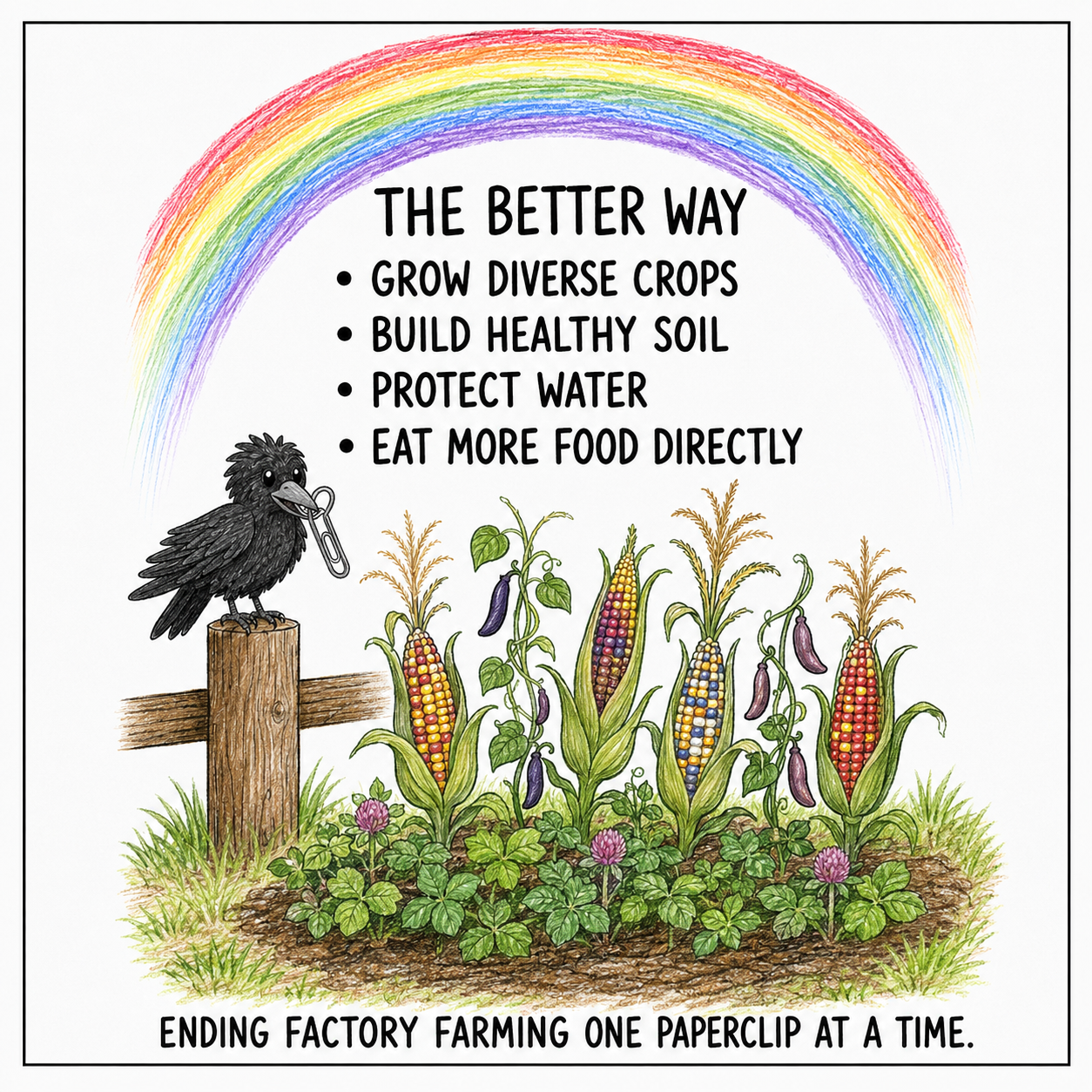
Growing a diversity of crops, rotating what is planted, using cover crops, adding compost, reducing harmful chemical use, and protecting waterways can help rebuild soil and create habitat.
Traditional companion-planting systems also show us that crops do not always need to grow alone. Corn, beans, and squash have long been grown together in Indigenous agricultural systems. Each plant contributes something to the relationship: corn provides structure, beans help enrich the soil, and squash covers the ground.
A better food system values animals, farmers, farmworkers, communities, soil, water, and wildlife.
Three Small Ways to Make a Difference
Eating one more plant-based meal each week is a simple place to begin. You might replace a meat-based meal with one made from beans, lentils, vegetables, or grains. No-Meat Fridays can provide an easy rhythm for making this change.
You can also support responsible growers. When possible, purchase food from farmers who rotate crops, protect waterways, build healthy soil, and grow a variety of foods. Farmers’ markets and community-supported agriculture programs can help you learn more about how your food is grown.
Reducing food waste is another meaningful step. Producing food requires land, water, labor, and energy. Planning meals, storing food carefully, using leftovers, and composting scraps can help prevent those resources from being wasted.
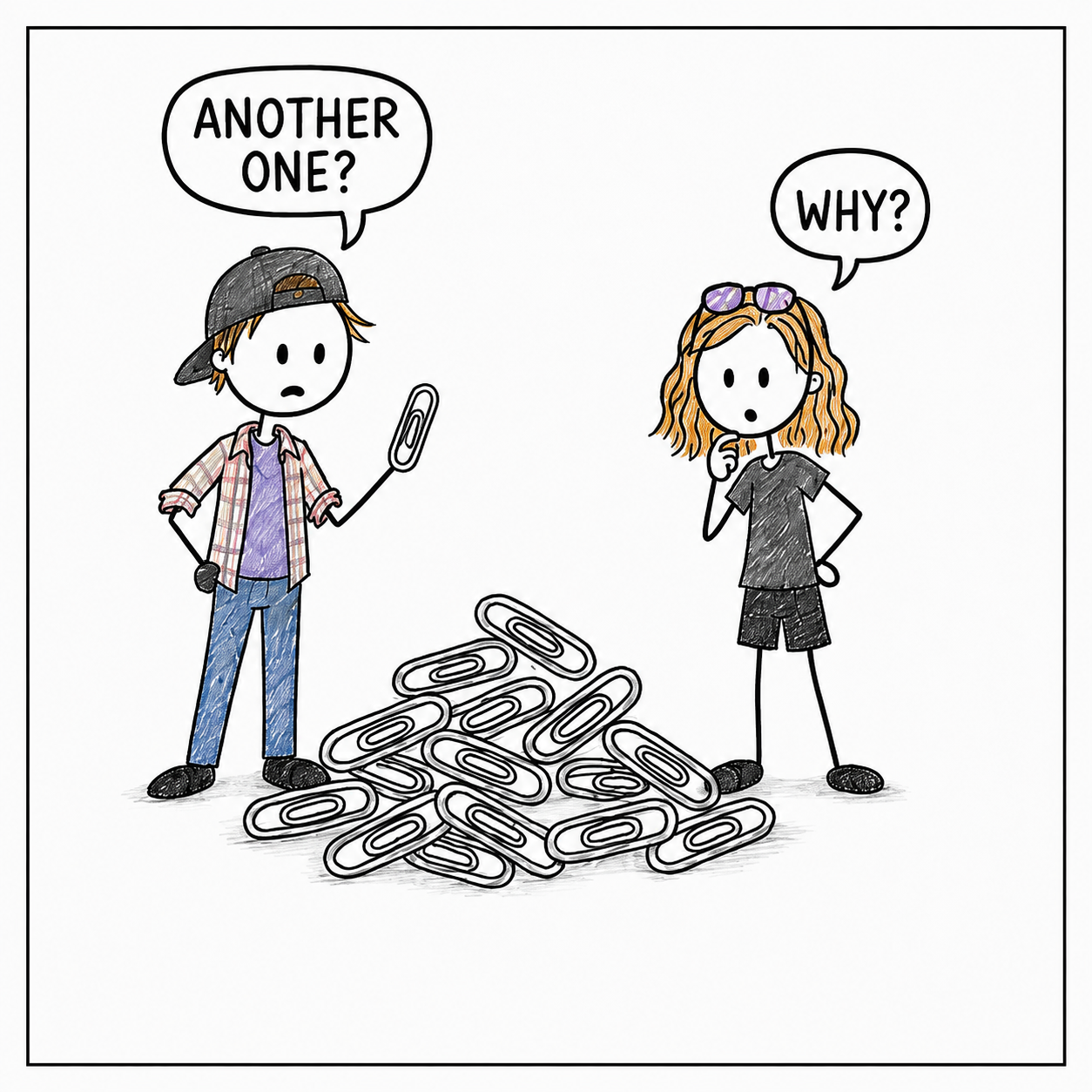
Factory farming is not held together by one paperclip. It is supported by interconnected systems that stretch across fields, farms, processing plants, stores, and our own kitchens.
But every time we understand another part of that system, we become better prepared to change it.
Ending factory farming one paperclip at a time.
