One Paperclip at a Time: Can a Crow Foil the Factory-Farm Plan?


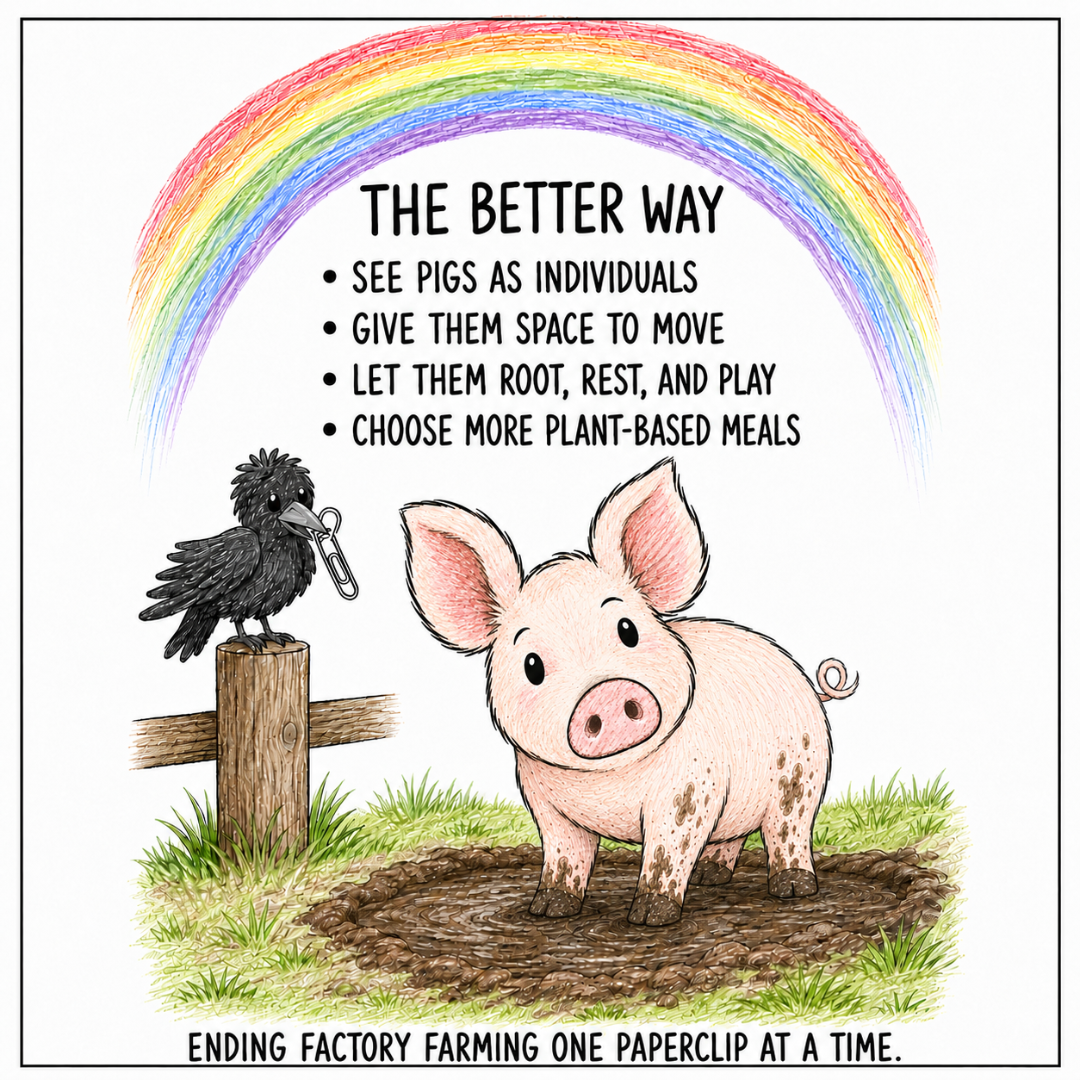
When we look at Piglet splashing in her mudpit at Rainbow Connection Farm, we see someone—not something. She has preferences, friendships, moods, favorite foods, and a clear idea of how she wants to spend her day. Like every pig, she deserves room to move, explore, rest, play, and simply be herself.
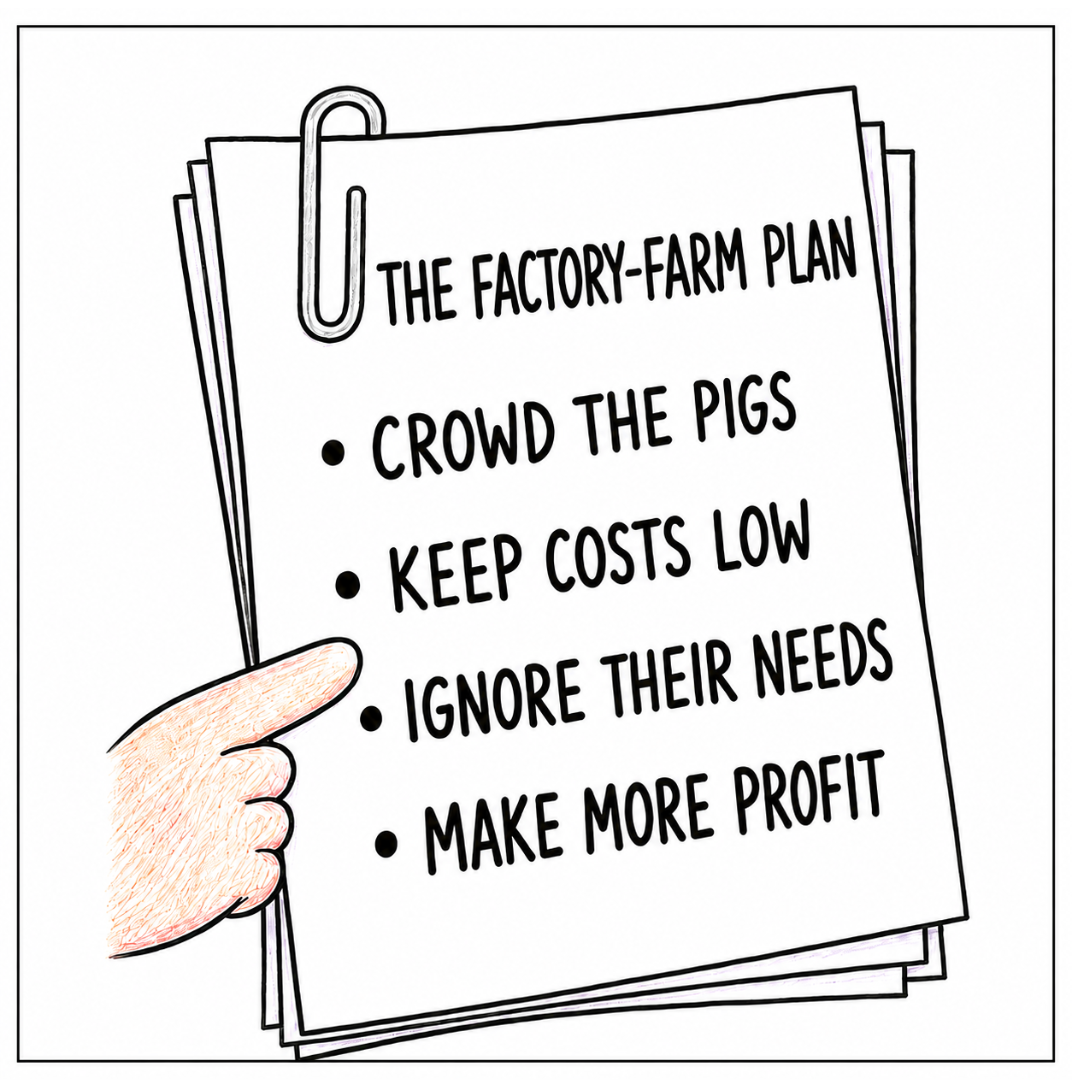
But many pigs raised within industrial farming systems never have those opportunities.
The Lives of Mother Pigs
Mother pigs, called sows, are often treated as units of production rather than living beings. In some industrial systems, pregnant pigs are kept in gestation crates—narrow metal enclosures that severely restrict their movement. They may be unable to turn around, walk freely, explore their surroundings, or comfortably interact with other pigs.
Near the time of birth, a mother pig may be moved into a farrowing crate. These crates are intended to reduce the risk of a mother accidentally crushing her piglets, but they also restrict her ability to move and care for her babies naturally. Scientific animal-welfare experts recommend moving toward well-designed farrowing pens that protect piglets while giving their mothers greater freedom of movement. European Food Safety Authority
Before giving birth, a pig naturally wants to search for a safe place and build a nest. She gathers materials, arranges them, and prepares a comfortable space for her babies. A barren crate prevents her from carrying out much of this deeply rooted behavior.
After her piglets are weaned, she may be bred again within a short period. According to the USDA, a sow can produce slightly more than two litters each year, frequently giving birth to more than eleven piglets at a time. USDA Economic Research Service
What Happens to the Piglets?
Piglets enter the world wanting warmth, nourishment, safety, and contact with their mother. In many U.S. commercial operations, they nurse for an average of about three weeks before they are weaned and separated from her. They may then be moved to a nursery facility and later to a finishing operation, where they grow until they reach slaughter weight. USDA Economic Research Service
That early separation is only one part of their experience. Young pigs may be housed in crowded or barren environments without soil, straw, or other materials they can investigate. Pigs have a strong need to root, forage, chew, and explore. When they cannot perform these natural behaviors, frustration and harmful behaviors such as tail biting can increase. European Food Safety Authority
Pigs are curious, social, intelligent animals. They form relationships, communicate with one another, learn routines, and seek comfort and stimulation. A system designed primarily around producing the greatest amount of meat at the lowest possible cost can leave little room for those needs.
The Cost Beyond the Barn
Large-scale confinement systems can also affect the people and communities living nearby. Housing thousands of animals in one location produces enormous amounts of manure and wastewater. When that waste is not managed properly, it can contribute nitrogen, phosphorus, pathogens, antibiotics, and other pollutants to the environment. U.S. Environmental Protection Agency
This is why the true cost of inexpensive pork cannot always be found on the price tag. Some of that cost may be carried by the pigs, the workers, nearby communities, the soil, the air, and the water.
Not every pig farm uses the same methods, and farmers themselves often work within a food system shaped by contracts, corporate demands, limited choices, and pressure to keep prices low. Changing this system is not about shaming individual families. It is about asking what our food costs, who pays the hidden price, and how we can make more compassionate choices together.
Three Small Ways to Make a Difference
1. Shop More Ethically
When purchasing pork, learn how the pigs were raised rather than relying only on attractive packaging. Look for producers who provide meaningful outdoor access, room for natural behaviors, and crate-free living. Ask questions at farmers markets, restaurants, and grocery stores. Ethical options may not be available or affordable for everyone, but every informed purchase helps show that animal welfare matters.
2. Support a Pig Sanctuary
Pig sanctuaries give rescued pigs the space and care they were once denied. You can donate, purchase an item from a sanctuary’s wishlist, sponsor a pig, share rescue stories, or volunteer when appropriate. Supporting sanctuaries also helps people meet pigs as individuals and understand why their lives matter.
3. Practice Meatless Fridays
Choose one day each week to leave meat off your plate. A Meatless Friday does not require perfection or an overnight lifestyle change. It is one regular, manageable choice that reduces demand while helping you discover new meals. Try vegetable soup, bean tacos, pasta, lentil chili, or another familiar meal made without meat.
We may not be able to dismantle factory farming with one decision, but small choices become habits, and shared habits can help change a system. We can begin by seeing pigs clearly: not as products, but as individuals worthy of care.
Ending factory farming one paperclip at a time.
