The Duck Garden: Fall Is for Planting
The Ducks are in the Garden
Growing food, tending the earth, and making room for every body—with a little help from the ducks.
Growing food, tending the earth, and making room for every body—with a little help from the ducks.
If you ask the six ducks who live in our garden, the Farm Moms are mostly the hired help. We may buy the seeds, haul the compost, pull the weeds, carry the water, and decide where everything gets planted, but those are apparently minor administrative details. The ducks live here, so according to duck law, this is their garden. And right now, the Duck Garden is getting ready for fall.
THIS WEEK IN THE GARDEN
Most people think of spring when they think about planting a garden. Spring means seed packets, tomato plants, flowers, and grand plans made before anyone remembers how hot July is going to be. But here in North Carolina, fall gives us another chance. As the summer garden begins slowing down, we're clearing tired plants, adding compost, and making room for vegetables that prefer cooler weather. The Duck Garden is beginning its transition from tomatoes, squash, flowers, and sprawling summer vines to greens, roots, and other cool-season vegetables.
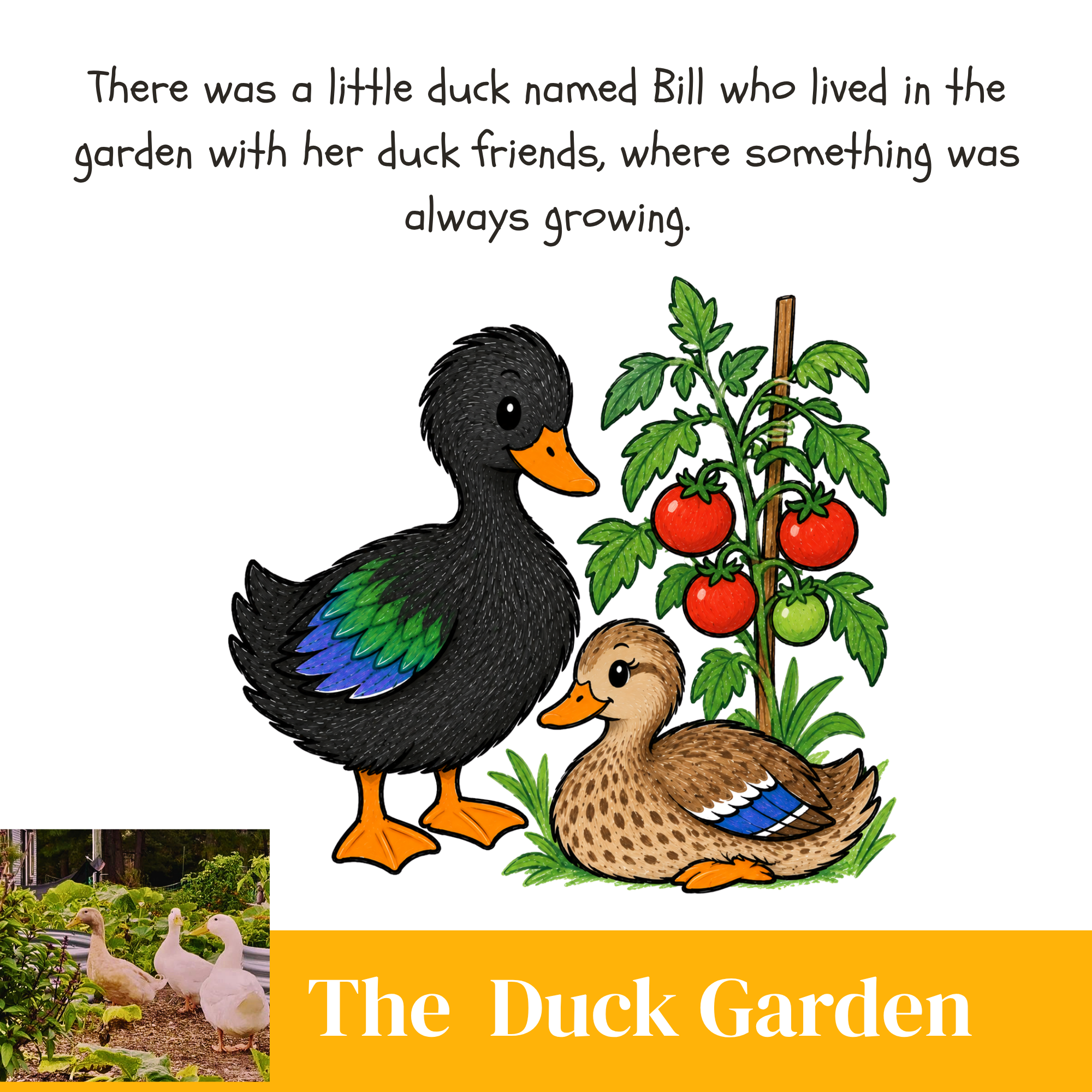
Of course, there are six supervisors for this operation. Bill is our girl mallard with deformed legs, usually accompanied by her best friend Othello, a black Cayuga boy whose feathers shine with hints of green and purple. Ruth Stout is our big white Pekin girl, usually found with Irie, her fawn-colored boyfriend. Then there are Betty Boop and Irene. Irene is a black Cayuga, while Betty is white and black and has angel wings, a permanent physical reminder of malnourishment before she was rescued.
Together, they make up the Duck Garden crew. They don't necessarily agree about gardening techniques, but they are unanimous about one thing: if the Farm Moms are digging in the dirt, there is probably something under there worth eating.
WHAT WE'RE GROWING
Our first fall crops include leafy greens and quick-growing vegetables like lettuce, spinach, kale, radishes, and turnips. These are perfect crops for the transition into cooler weather because many of them don't need an entire summer to produce something useful. Radishes can grow surprisingly quickly, while greens can often be harvested a little at a time instead of waiting for one big harvest.
We also love growing food that can serve more than one purpose. Some can come into the kitchen, some can become fresh treats for the animals, and vegetables that aren't quite pretty enough for a human dinner don't automatically become waste around here. On a farm with 35 animals, somebody is usually willing to eat your ugly vegetables.
THE DUCK TEST
Can ducks eat it? Sometimes. Will ducks destroy it? Also sometimes. Will ducks help? Absolutely. Ducks can be wonderful garden companions because bugs, slugs, snails, and all sorts of tiny creatures hiding around the garden are basically an all-you-can-eat buffet if you're a duck.
Unfortunately, ducks aren't particularly interested in our definition of a garden. A weed, a vegetable, a carefully planted seedling, and the spot where you absolutely do not want a duck standing can all look remarkably similar to them. Young plants sometimes need protection until they're established, and we have to think about where the ducks can safely explore without destroying what we just planted.
That's part of gardening with animals. We don't expect the garden to look like a picture in a seed catalog. We expect footprints, nibbled leaves, muddy water, crooked plants, and the occasional mystery involving a vegetable that was definitely there yesterday.
GROW THIS AT HOME
You don't need six ducks—or any ducks—to start a fall garden. You don't even need a big garden. A container of lettuce counts. A few radishes count. A pot of spinach by the back door counts. Gardening doesn't have to begin with raised beds, expensive equipment, and twenty-seven seed packets you suddenly have to figure out how to use.
Fall seeds are often going into soil that is still warm from summer, so moisture is especially important while they're germinating. Tiny seeds and new seedlings don't have deep root systems yet, which means the top layer of soil can dry out before those little roots have a chance to find water deeper underground. Start small, keep an eye on the soil, and see what grows.
WHY WE GROW THIS WAY
One of the things we're learning at Rainbow Connection Farm is that a garden doesn't exist separately from everything around it. The garden grows food. Animals eat some of that food. Garden scraps can become animal treats instead of trash. Other plant material can become compost, and that compost eventually goes back into the garden. Flowers feed pollinators. Plants create shelter for insects and wildlife. Ducks hunt for bugs, fertilize the ground, and turn perfectly clean water muddy approximately seventeen seconds after we fill it.
Everything connects.
A healthy garden isn't just a vegetable factory. It's a little ecosystem filled with soil, plants, insects, birds, water, microorganisms, animals, and people, all affecting one another. That means our goal isn't to create a perfect garden. We're trying to create a living one.
And a living garden has room for a few crooked rows—and six ducks.
FROM THE DUCKS
The official Duck Garden report is that fall planting has begun and the ducks have been extremely helpful. Ruth and Irie have inspected the general area. Betty Boop and Irene remain available for bug-related consultations. Othello is sticking close to Bill, as usual, while Bill has accepted the important position of supervisory garden management.
The Farm Moms would like it noted that no ducks were actually appointed to any of these positions.
The ducks have rejected our statement.
BILL'S DISABILITY MOMENT
Bill's legs are deformed, so she doesn't move around the garden the same way the other ducks do. Othello doesn't seem particularly concerned about that. He's Bill's buddy, and where you find Bill, you will often find Othello nearby.
Bill doesn't need to become more like the other ducks to belong here. Instead, part of caring for her means paying attention to the environment around her. Can she reach the water? Can she get to her food? Is there a safe place for her to rest? Is there an obstacle that is nothing more than a minor inconvenience for another duck but a genuine barrier for Bill?
Those are accessibility questions.
Disability awareness isn't simply noticing that someone's body works differently. It's noticing when the world around that person—or duck—was designed as though their kind of body didn't exist. Accessibility asks us what we can change about the environment instead of always asking the disabled individual to adapt.
Sometimes inclusion looks surprisingly ordinary. It can be a lower step, a smoother path, a closer water bowl, a place to rest, more time to get somewhere, or another way of doing the same thing.
Bill doesn't have to walk like Ruth, Irie, Irene, Betty Boop, or Othello to be one of the Duck Garden ducks.
She already is.
The garden belongs to Bill, too.
