
People & Belonging
Resources for growing understanding, strengthening relationships, and creating places where everyone can belong.
People & Belonging brings together practical, compassionate resources for navigating identity, family, relationships, school, and community. These guides are created to help LGBTQ+ people and the people who love them move through important conversations with greater understanding and confidence.
Explore resources for parents and caregivers, coming out and identity, gender and sexuality, school advocacy, relationships, family acceptance, healthy boundaries, and building supportive communities.
Whether you are supporting a child who has just come out, learning more about someone you love, navigating extended family, advocating at school, or simply trying to become a safer and more understanding person, these resources offer practical language, thoughtful guidance, and tools you can actually use.
Because belonging is more than being welcomed into a room. It is being able to bring your whole self with you.
Curiosity & Common Good
Inclusive learning for a kinder world.
Coming Out & Identity
Resources for LGBTQ+ young people who are figuring out who they are and how they want to move through the world. These guides can be given directly to a child or teen, offering practical help with identity, coming out, privacy, friendships, community, faith, boundaries, and new experiences—without assuming they already have everything figured out.
Coming Out: You Get to Decide
Coming out is personal. There is no perfect time, no required way to do it, and no list of people who are entitled to know.
Coming Out: You Get to Decide is a practical, affirming guide written directly for LGBTQ+ young people who are figuring out what coming out might look like for them. It’s designed for parents and caregivers to give to a child or teen as a supportive resource—not a set of instructions or pressure to come out.
The guide helps young people think through who feels safe, what they want to share, how they might start the conversation, and when waiting may be the right choice. It also makes room for young people who are still questioning or whose understanding of their identity may change.
Inside, young people will find guidance on choosing who to tell first, thinking about safety, coming out by conversation, text or letter, setting boundaries around questions, deciding who gets to know, navigating social media, handling supportive or awkward reactions, responding when coming out goes badly, dealing with being outed, and finding affirming people and community.
The guide also includes a printable Coming-Out Plan that helps young people think through what they know right now, who feels safe, what they want to keep private, what they are worried about, and who they can turn to afterward.
Most importantly, this resource reminds young people:
You don't have to know exactly yet.
You don't have to tell everyone.
You don't have to answer every question.
You don't have to come out before you're ready.
And you get to decide who has access to your story.
Created for the People & Belonging collection from Curiosity & Common Good.
Printable PDF • Instant digital download • LGBTQ+ affirming • Teen-friendly • Parent-to-child resource

50 Things I Want You to Know While You’re Figuring This Out
Figuring out who you are can take time. You don’t need all the answers, the perfect label, or a plan for what comes next.
50 Things I Want You to Know While You’re Figuring This Out is an affirming guide written directly to LGBTQ+ young people. It’s designed for a parent or caregiver to hand to a child or teen who is questioning, exploring their identity, coming out, or simply trying to understand themselves a little better.
Rather than telling young people who they should be, this resource gives them 50 messages they deserve to hear: you can take your time, you don’t owe anyone a label, you get to decide who knows, your boundaries matter, your relationships deserve respect, faith is allowed to be complicated, you deserve community, and there is a future much bigger than what you can see right now.
Inside the guide:
50 affirming messages written directly to LGBTQ+ young people
Support for questioning and changing labels
Coming out, privacy, names and pronouns
School, friendships and finding community
Dating, consent and healthy relationships
Faith, church and difficult religious experiences
Boundaries and responding to invasive questions
What to do when someone outs you
Encouragement for navigating rejection or difficult reactions
“When You Don’t Know What to Say” conversation starters
“What I Want My Grown-Up to Know” reflection pages
A final page of affirmations to return to when things feel difficult
This isn’t a guide to rushing a young person toward certainty. It’s something an affirming adult can quietly hand them and say, “You don’t have to have this figured out. I’m here while you do.”
Part of the People & Belonging collection from Curiosity & Common Good.
Printable PDF • Instant digital download • LGBTQ+ affirming • Teen-friendly • Parent-to-child resource
How to Set a Boundary
Setting a boundary can be hard—especially when you’re still figuring out who you are, what feels comfortable, and how much of yourself you want to share.
How to Set a Boundary is a practical, affirming guide written directly for LGBTQ+ young people. It’s designed for a parent or caregiver to give to a child or teen who needs help finding the words to protect their privacy, identity, relationships, and emotional space.
This guide helps young people understand that a boundary isn’t about being rude, difficult, or controlling someone else. It’s about recognizing what they need and learning how to communicate it clearly.
Inside the guide:
What a boundary actually is
Understanding privacy and what you never owe someone
A simple three-part formula for setting a boundary
Short phrases to use when you don’t know what to say
Boundaries with parents and family
Boundaries with friends
Boundaries at school
Social media and online boundaries
What to do when someone keeps pushing
The difference between boundaries and controlling behavior
What to do when setting a boundary doesn’t feel safe
A printable Build Your Boundary worksheet
Ready-to-use scripts for coming out, privacy, names and pronouns, jokes, faith, dating, social media, and more
Young people will find practical phrases such as “That’s private,” “Please don’t tell anyone else,” “I’m not ready to talk about that,” and “I’m ending this conversation now”—along with guidance for deciding when to ask a trusted adult for help.
Most importantly, this resource reminds LGBTQ+ young people that kindness does not require giving everyone unlimited access to their time, body, identity, relationships, or private life.
Part of the People & Belonging collection from Curiosity & Common Good.
Printable PDF • Instant digital download • LGBTQ+ affirming • Teen-friendly • Parent-to-child resource
Social Media When You’re Figuring Things Out
Social media can be a place to find community, try out new language, discover people who understand, and feel less alone. But when you’re still figuring out your identity—or you’re out to some people but not others—being online can get complicated quickly.
Social Media When You’re Figuring Things Out is a practical, affirming guide written directly for LGBTQ+ young people navigating identity and online life. It helps teens think intentionally about what they share, who can see it, and how to stay connected without feeling pressured to make their identity public before they’re ready.
Inside the guide:
Exploring your identity online without publicly coming out
Names, pronouns, labels and profile bios
Deciding what to post and what to keep private
Tags, screenshots and friends sharing information
Managing different accounts and audiences
Finding healthy LGBTQ+ community online
Online strangers and protecting personal information
Dating, DMs, flirting and boundaries
Handling hateful comments and harassment
Navigating social media when family members follow you
What to do if someone outs you online
Recognizing when your feed is hurting instead of helping
A printable privacy check
Ready-to-use scripts for common online situations
The guide reinforces one central message: you can be figuring yourself out without figuring it out in public.
Part of the People & Belonging collection from Curiosity & Common Good.
Printable PDF • Instant digital download • LGBTQ+ affirming • Teen-friendly • Parent-to-child resource
LGBTQ+ Parents & Families
Practical, compassionate resources for parents, caregivers, grandparents, and families supporting LGBTQ+ children and teens. Find guidance for coming out, family acceptance, grandparents and relatives, difficult conversations, advocacy, boundaries, safety, and creating a home where every child can fully belong.
A Parent’s Guide to Support, Love, Advocacy & Belonging
When your child tells you they are transgender, you may want to say the right thing, ask a hundred questions, and figure out what comes next—all at once. This guide helps parents and caregivers begin with what matters most: keeping your child safe, loved, heard, and connected to you.
Written in a warm, practical, affirming voice, this printable guide walks families through both the first conversation and the days that follow. It offers concrete language parents can use, questions worth asking, common responses to avoid, and practical ways to advocate for a transgender child at home, school, church, and in the wider community.
Inside you'll find guidance on names and pronouns, privacy and coming out, supporting gender expression, navigating your own emotions as a parent, creating an affirming home, school and family advocacy, faith and religious questions, understanding transition, and responding to safety concerns. A simple 30-day parent plan helps turn good intentions into everyday support.
This resource is especially designed for parents who want compassionate, LGBTQ+ affirming guidance—including families who are also working through questions of faith, church, and belonging. It does not treat a transgender child as a problem to solve or a theological debate to win. Instead, it helps parents remain curious, keep learning, and protect the relationship they have with the child right in front of them.
12-page printable PDF • Instant digital download • Parent & caregiver resource • LGBTQ+ affirming • Faith-friendly • Practical scripts and action steps • Resource and further-learning section
Created by Curiosity & Common Good — Inclusive learning for a kinder world.

When Your Child Comes Out as Gay or Lesbian
A Parent’s Guide to the First Conversation & What Comes Next
When your child tells you they are gay or lesbian, your first response matters—but you do not need to have every answer.
This compassionate, LGBTQ+ affirming guide helps parents and caregivers navigate the first conversation and the days and weeks that follow. Rather than treating coming out as a problem to solve, it helps parents begin with love, listening, safety, curiosity, and connection.
Inside, parents will find practical guidance for:
Responding during the first five minutes
Understanding gay and lesbian identities without demanding certainty or “proof”
Respecting privacy and allowing a child to control their own coming-out story
Processing a parent’s own emotions without placing them on the child
Creating a home where LGBTQ+ identity becomes an ordinary, welcomed part of family life
Navigating crushes, dating, and relationships
Advocating at school, sports, church, and in the community
Working through faith and religious questions without turning a child into a theological debate
Setting boundaries with grandparents and extended family
Responding to bullying, rejection, and safety concerns
Following a practical 30-Day Parent Plan
Finding trusted organizations and resources for continued learning
The guide also includes sample language parents can actually use, supportive callout boxes, questions for reflection, and concrete next steps.
Designed especially for parents who want an affirming resource that can also make room for questions about faith, church, family, and belonging.
13-page printable PDF • Instant digital download • LGBTQ+ affirming • Parent & caregiver resource • Faith-friendly • Practical scripts & action steps
Curiosity & Common Good
Inclusive learning for a kinder world.

When You're Affirming but Your Spouse Isn't
A Parent & Caregiver Guide to Protecting Your LGBTQ+ Child While Navigating a Divided Home
What happens when you want to fully support your LGBTQ+ child—but your spouse isn't in the same place?
Disagreement between parents can quickly place a child in the middle. This practical, compassionate guide helps affirming parents protect their child's dignity and sense of belonging while navigating a spouse's questions, resistance, religious beliefs, or rejection.
The goal isn't to force two adults to agree overnight. It's to make sure your child doesn't have to carry the weight of the disagreement while the adults work through it.
Inside you'll find guidance for:
Keeping your child from becoming the referee between parents
Establishing minimum standards for respect at home
Setting boundaries around ridicule, rejection, threats, and forced secrecy
Talking with your spouse away from your child
Understanding what's underneath your spouse's resistance
Navigating disagreements about names and pronouns
Handling faith and theological differences
Protecting your child's privacy
Navigating grandparents and extended family
Recognizing when disagreement is becoming harmful or unsafe
Supporting your child when you cannot control your spouse's response
Finding appropriate outside support
Creating a practical 30-day family plan
The guide also includes sample language, conversation starters, household-boundary ideas, and a printable conversation worksheet for preparing for difficult discussions with your spouse.
You don't have to resolve every disagreement today to begin protecting your child today.
Printable PDF • Instant digital download • LGBTQ+ affirming • Parent & caregiver resource • Practical scripts & boundaries • Family support resource • Faith-friendly
Curiosity & Common Good
Inclusive learning for a kinder world.
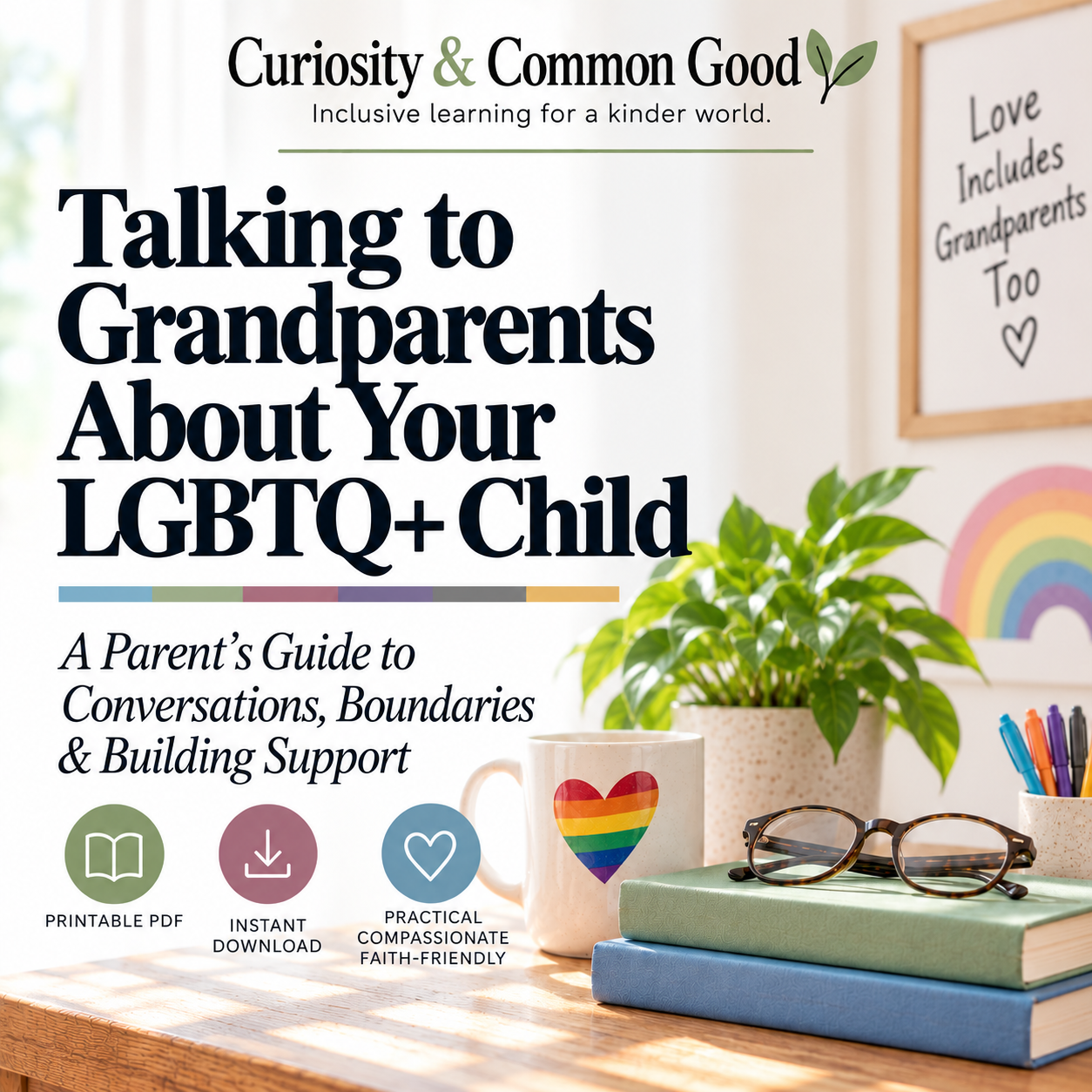
Talking to Grandparents About Your LGBTQ+ Child
A Parent’s Guide to Family Conversations, Boundaries & Belonging
When your child comes out as LGBTQ+, you may quickly find yourself navigating another important question: How do we tell the grandparents?
This compassionate, practical guide helps parents and caregivers prepare for conversations with grandparents while keeping their LGBTQ+ child’s privacy, dignity, and emotional safety at the center.
Rather than expecting grandparents to understand everything immediately, the guide makes room for learning and questions—while drawing a clear distinction between needing time to learn and expecting a child to tolerate harmful behavior.
Inside, parents will find guidance for:
Asking your child before sharing their story
Deciding what the grandparent conversation is actually for
Starting the conversation with clear, compassionate language
Helping grandparents navigate names, pronouns, partners, and LGBTQ+ terminology
Responding when grandparents say, “But I love them...”
Handling religious and theological objections without making the child a debate
Preparing for holidays, birthdays, reunions, and family gatherings
Giving grandparents appropriate places to take their questions
Setting loving but firm family boundaries
Responding when a grandparent refuses to respect the child
Reassuring your child that adult family conflict is not their responsibility
Creating a practical before/during/after conversation plan
The guide also includes a special printable page written directly to grandparents with five things they can do immediately to help their LGBTQ+ grandchild feel loved and included.
Designed for families who want to preserve meaningful grandparent relationships without asking an LGBTQ+ child to hide, endure rejection, or become the family educator.
Printable PDF • Instant digital download • LGBTQ+ affirming • Parent & caregiver resource • Grandparent support • Faith-friendly • Conversation scripts • Boundary-setting tools
Curiosity & Common Good
Inclusive learning for a kinder world.
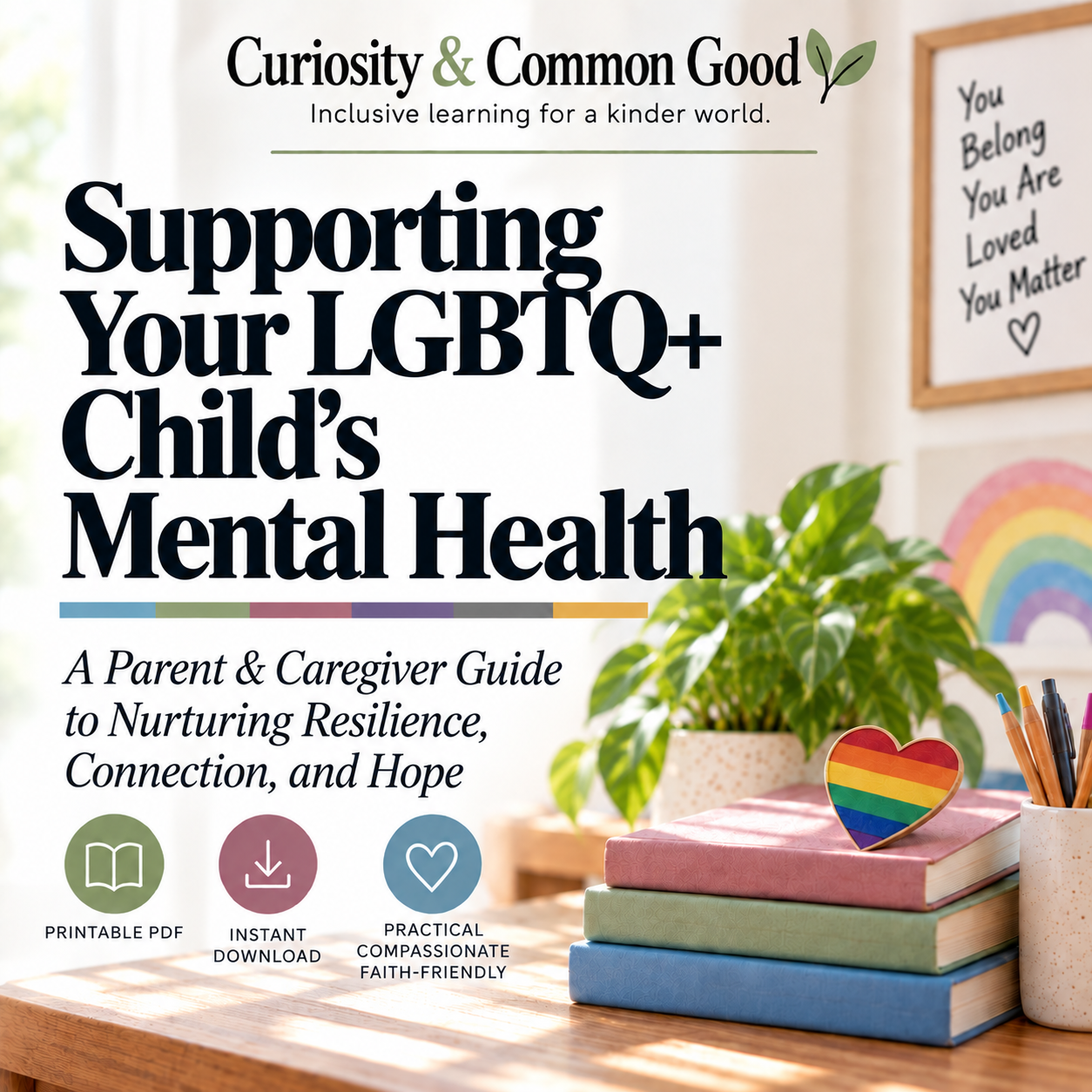
Supporting Your LGBTQ+ Child’s Mental Health
A Parent & Caregiver Guide to Connection, Support, Warning Signs & Finding Help
Supporting an LGBTQ+ child’s mental health doesn’t mean becoming their therapist. It means creating a home where they can tell you when life feels hard—and knowing what to do when they need more support than you can provide alone.
This compassionate, practical guide helps parents and caregivers understand how affirmation, family connection, school, faith, relationships, and community can affect an LGBTQ+ young person’s well-being.
Inside, you’ll find guidance for:
Building connection before there is a crisis
Recognizing meaningful changes in mood and behavior
Asking directly about suicide and self-harm
Knowing what to do when your child says they are not safe
Listening without turning conversations into interrogations
Understanding how bullying, rejection, discrimination, and isolation can affect well-being
Looking at school, home, church, relationships, and online environments
Finding an LGBTQ+-competent mental-health professional
Understanding therapy, confidentiality, and parental involvement
Responding when religious shame or church experiences are contributing to distress
Creating a family support and safety plan
Making a practical 30-day parent plan
Finding reliable crisis and family-support resources
The guide also includes sample conversation starters, questions to ask a prospective therapist, a printable family support-plan worksheet, and practical steps parents can begin using immediately.
This resource does not treat being LGBTQ+ as a mental-health problem. Instead, it helps families create the connection, affirmation, safety, and access to professional care that allow LGBTQ+ young people to thrive.
Printable PDF • Instant digital download • Parent & caregiver resource • LGBTQ+ affirming • Mental-health support • Practical & compassionate • Faith-friendly
Curiosity & Common Good
Inclusive learning for a kinder world.
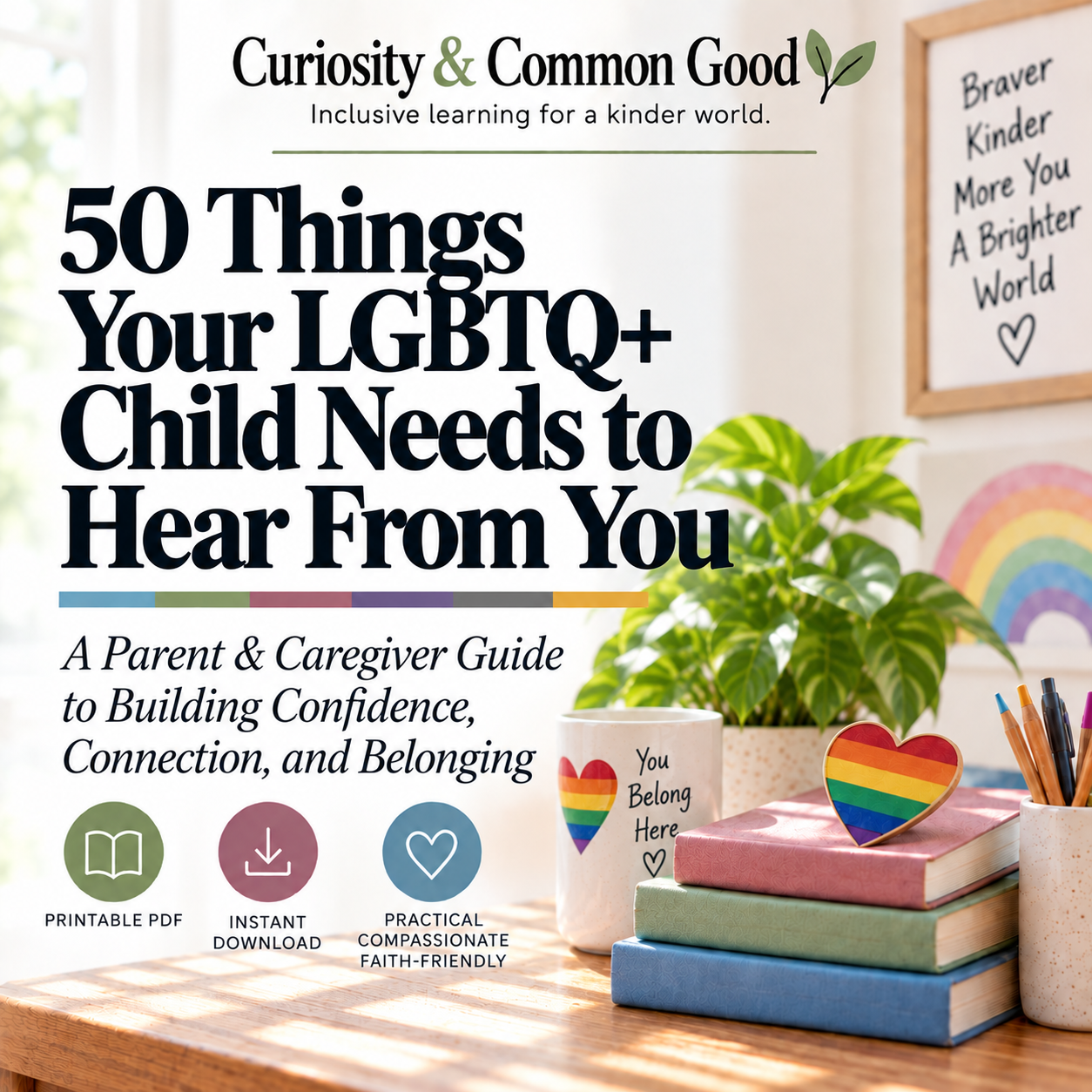
50 Things Your LGBTQ+ Child Needs to Hear From You
A Parent & Caregiver Guide to the Words That Build Love, Trust, Safety & Belonging
Sometimes parents know what they want their LGBTQ+ child to understand but aren't sure how to put it into words.
This practical, compassionate guide gives parents and caregivers 50 things LGBTQ+ children and teens deserve to hear—not as a script to recite all at once, but as language families can return to again and again.
The 50 statements are organized around five important areas of family support:
Love without conditions
Trust and coming out
Safety and advocacy
Identity and becoming
Relationships, faith and community
You'll find language such as “You belong in this family,” “Your story belongs to you,” “You never have to accept cruelty to keep the peace,” and “You are allowed to keep discovering who you are”—along with a short explanation of why each message matters.
The guide also includes parent reflection questions, practical ways to make affirming words believable through everyday actions, and a seven-day practice for making support a natural part of family life.
Because affirmation isn't one perfect coming-out conversation. It's the hundreds of ordinary moments that tell a child: you are known, you are loved, and you belong here.
Printable PDF • Instant digital download • Parent & caregiver resource • LGBTQ+ affirming • Practical & compassionate • Faith-friendly
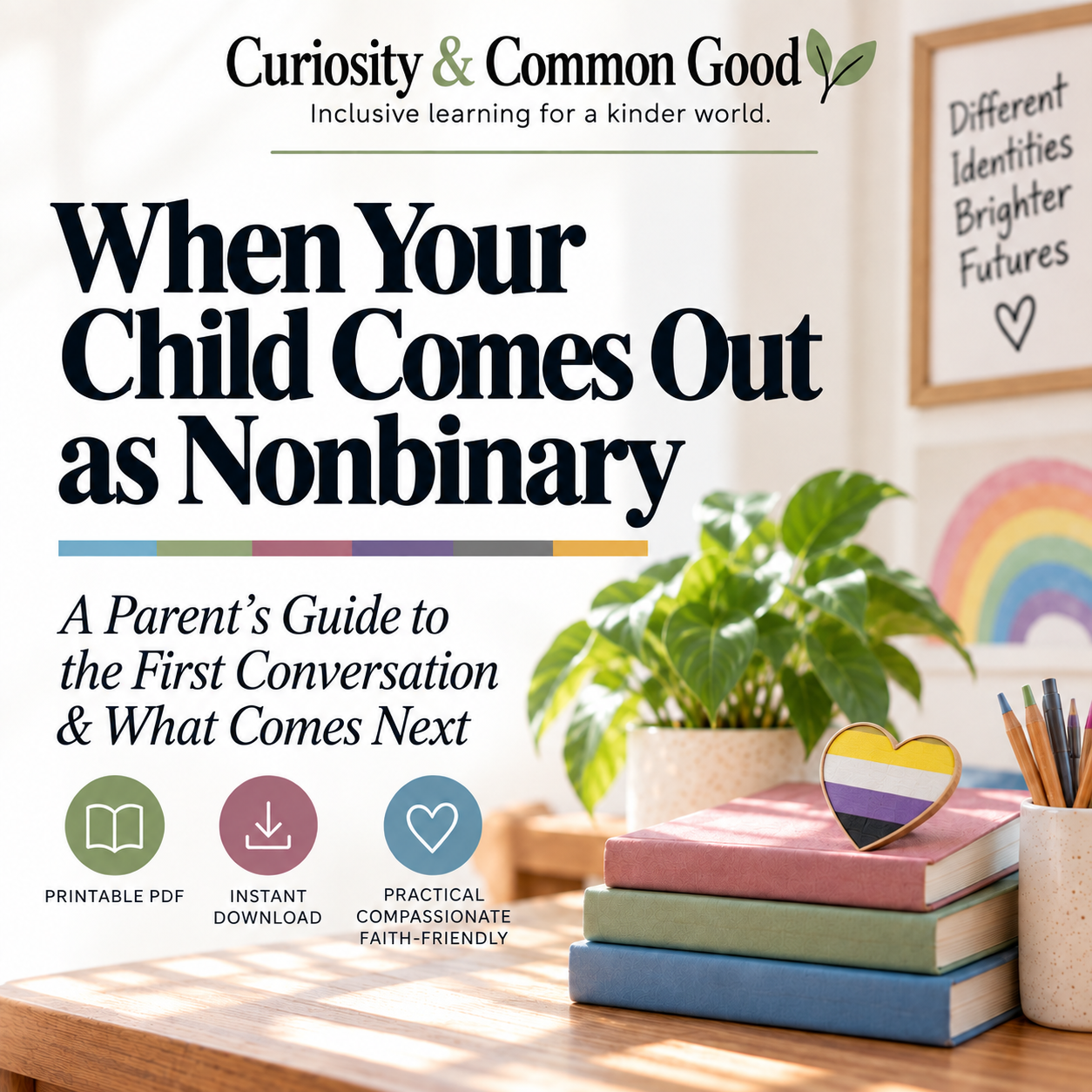
When Your Child Comes Out as Nonbinary
A Parent & Caregiver Guide to Gender, Pronouns, Support & Belonging
When your child tells you they are nonbinary, you may want to be supportive while also realizing you have questions about gender, pronouns, names, school, family, or what comes next.
This compassionate, practical guide helps parents and caregivers begin with the most important thing: making sure their child knows that being more fully known will not make them less loved.
Inside, parents will find guidance for:
Responding during the first conversation
Understanding what nonbinary means
Recognizing that there is no single way to “look” nonbinary
Learning and practicing names and pronouns
Respecting privacy and allowing your child to control their own coming-out story
Processing your own questions and emotions without placing them on your child
Making room for gender expression and exploration at home
Navigating school and community
Talking with grandparents, siblings, and extended family
Working through faith and religious questions
Understanding that nonbinary people do not all follow the same transition path
Advocating for your child while still respecting their independence
Creating a practical 30-day plan for moving from understanding to everyday support
Throughout the guide, you'll also find sample language, conversation starters, practical reminders, and concrete actions parents can begin using right away.
This resource does not ask parents to become gender experts overnight. It offers a place to begin—with curiosity, respect, love, and a willingness to keep learning.
Printable PDF • Instant digital download • Parent & caregiver resource • LGBTQ+ affirming • Nonbinary and gender identity resource • Conversation scripts • Practical action steps
Curiosity & Common Good
Inclusive learning for a kinder world.
School & Community
Practical resources for navigating the places where LGBTQ+ people learn, gather, worship, participate, and build community. Find guides for school advocacy, teachers and coaches, bullying and safety, inclusive organizations, finding affirming churches and community spaces, and recognizing the difference between simply being welcomed and truly belonging.
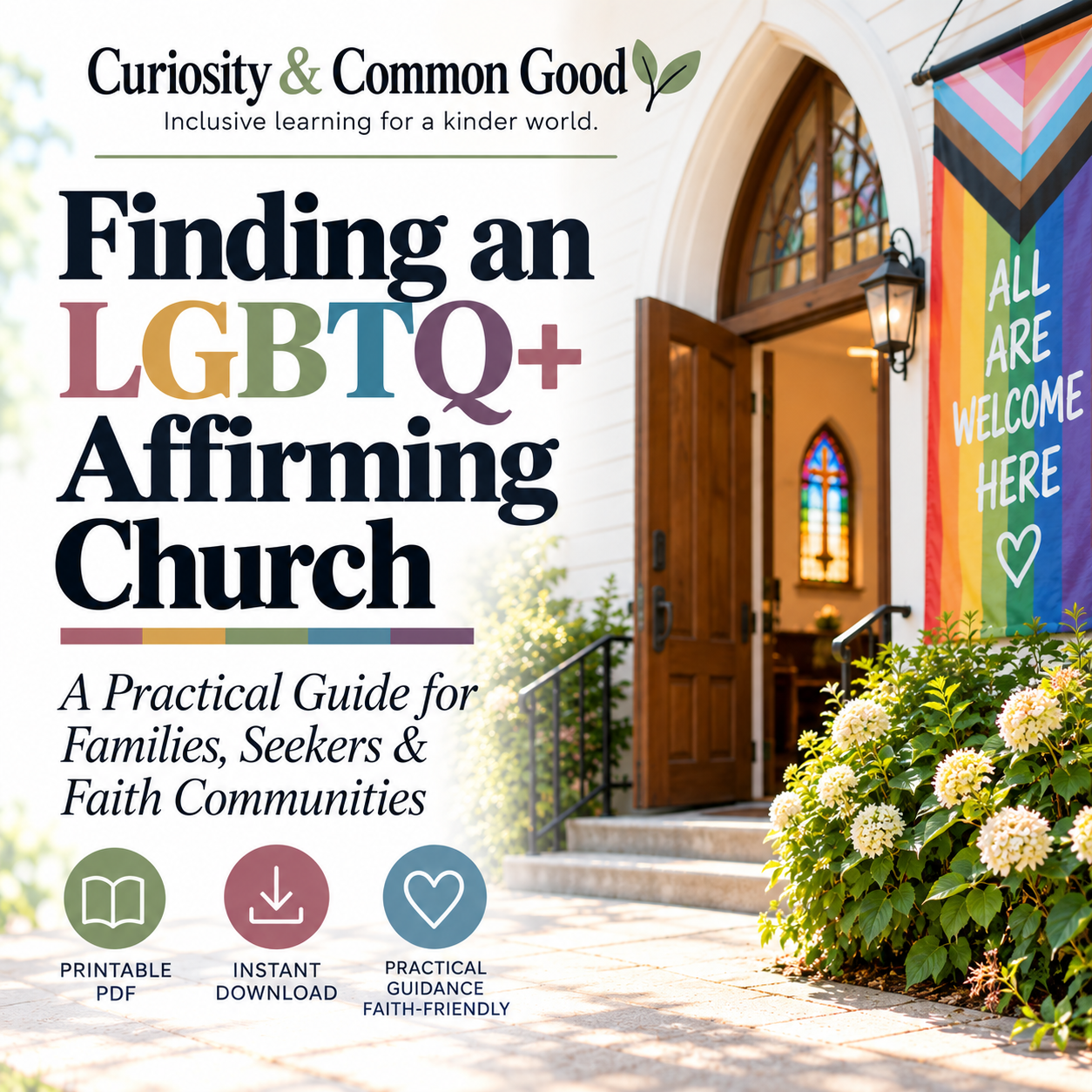
Finding an LGBTQ+ Affirming Church
A Practical Guide to Looking Beyond “Everyone Is Welcome”
Finding a church that says “Everyone is welcome” is easy. Finding one where LGBTQ+ people can truly belong, lead, love, marry, raise families, ask questions, and participate fully can be much harder.
This practical, LGBTQ+ affirming guide helps individuals and families look beyond welcoming language and determine what a church actually believes and practices.
Designed especially for LGBTQ+ people, parents and caregivers, families, and people returning to faith after church harm, the guide provides concrete questions and tools for evaluating a congregation before—and after—you walk through the doors.
Inside you'll find guidance for:
Understanding the difference between welcoming and affirming
Researching a church before visiting
Questions to ask pastors and church leaders
Determining whether LGBTQ+ people have full access to membership, leadership, marriage, and ministry
Evaluating transgender and nonbinary inclusion
Looking closely at children's and youth ministries
Recognizing theology that sounds welcoming but still requires LGBTQ+ people to change
Identifying common red-flag phrases
Evaluating the actual culture of a congregation
Visiting churches after experiencing church harm
Knowing when vague answers deserve more questions
The guide also includes a printable LGBTQ+ Affirming Church Checklist and a Church Comparison Tool so families can research and compare congregations side by side.
This isn't a guide to finding a church that will simply let LGBTQ+ people through the door. It's a resource for finding a community where they can bring their whole lives with them.
Printable PDF • Instant digital download • LGBTQ+ affirming • Faith-friendly • Parent & family resource • Church checklist • Comparison worksheet • Practical questions & red flags
Curiosity & Common Good
Inclusive learning for a kinder world.
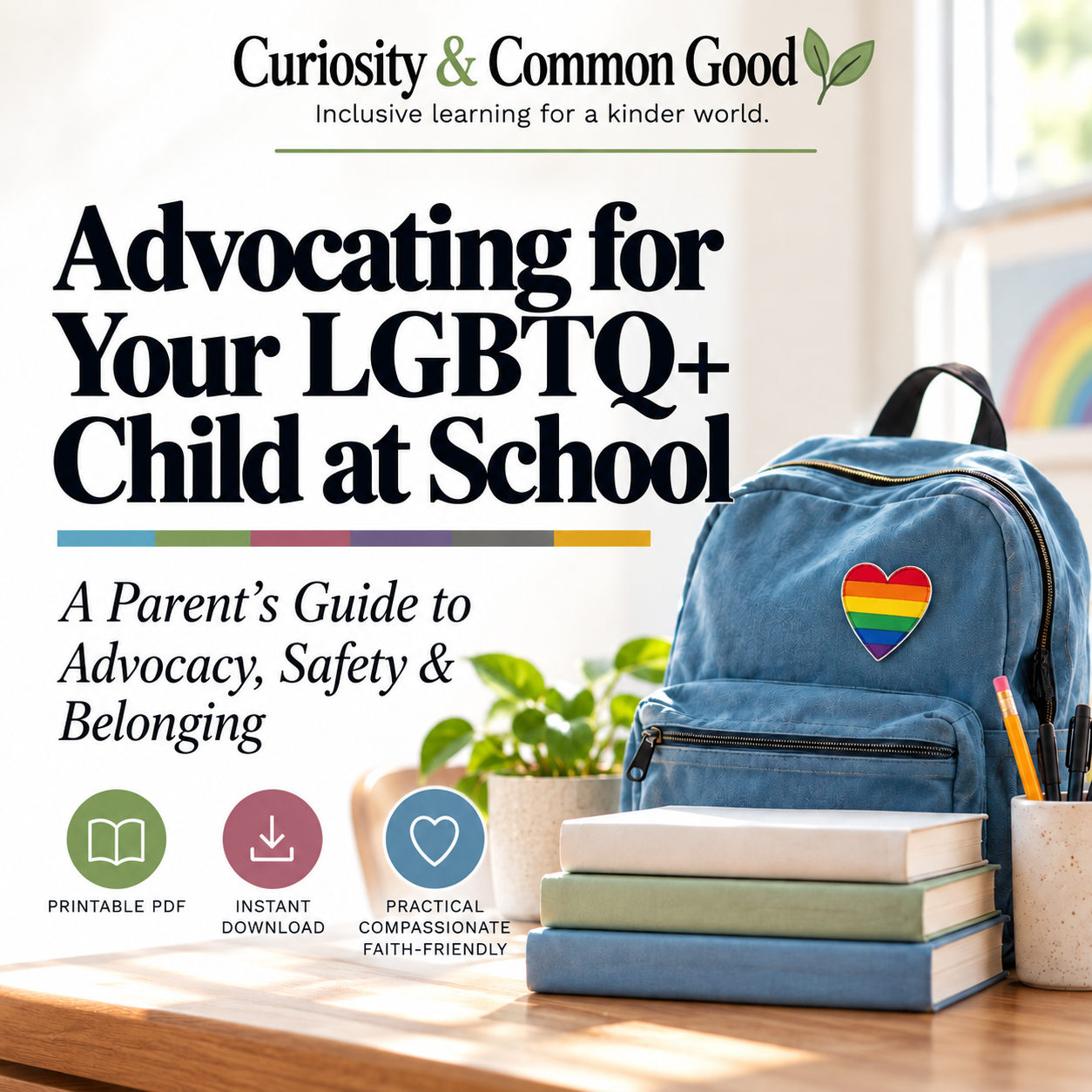
Advocating for Your LGBTQ+ Child at School
A Parent & Caregiver Guide to Advocacy, Safety, Privacy & Belonging
School should be a place where your child can learn, build friendships, explore their interests, and belong—not a place where they have to constantly defend who they are.
Advocating for Your LGBTQ+ Child at School is a practical guide for parents and caregivers who want to support their child when questions or concerns arise around LGBTQ+ identity at school.
Rather than simply telling parents to “advocate,” this guide walks you through what that can actually look like—from the first conversation with your child to meetings with teachers and administrators.
Inside you'll find guidance for:
Starting with your child before contacting the school
Deciding when a parent should step in
Talking with teachers, counselors, coaches, and administrators
Navigating names, pronouns, and privacy
Responding to bullying and harassment
Documenting incidents and school responses
Addressing concerns involving teachers or staff
Preparing for school meetings
Writing clear, effective emails
Following up when the first response isn't enough
Understanding school policies and procedures
Building a network of safe adults at school
Helping your child maintain a voice in their own advocacy
The guide also includes sample language parents can actually use, a sample school email, follow-up questions, and a printable School Advocacy Planner to help families prepare before a meeting or conversation.
The goal isn't to fight every battle for your child. It's to make sure they know they don't have to face difficult systems alone.
Printable PDF • Instant digital download • Parent & caregiver resource • LGBTQ+ affirming • School advocacy • Practical & compassionate • Faith-friendly
Curiosity & Common Good
Inclusive learning for a kinder world.
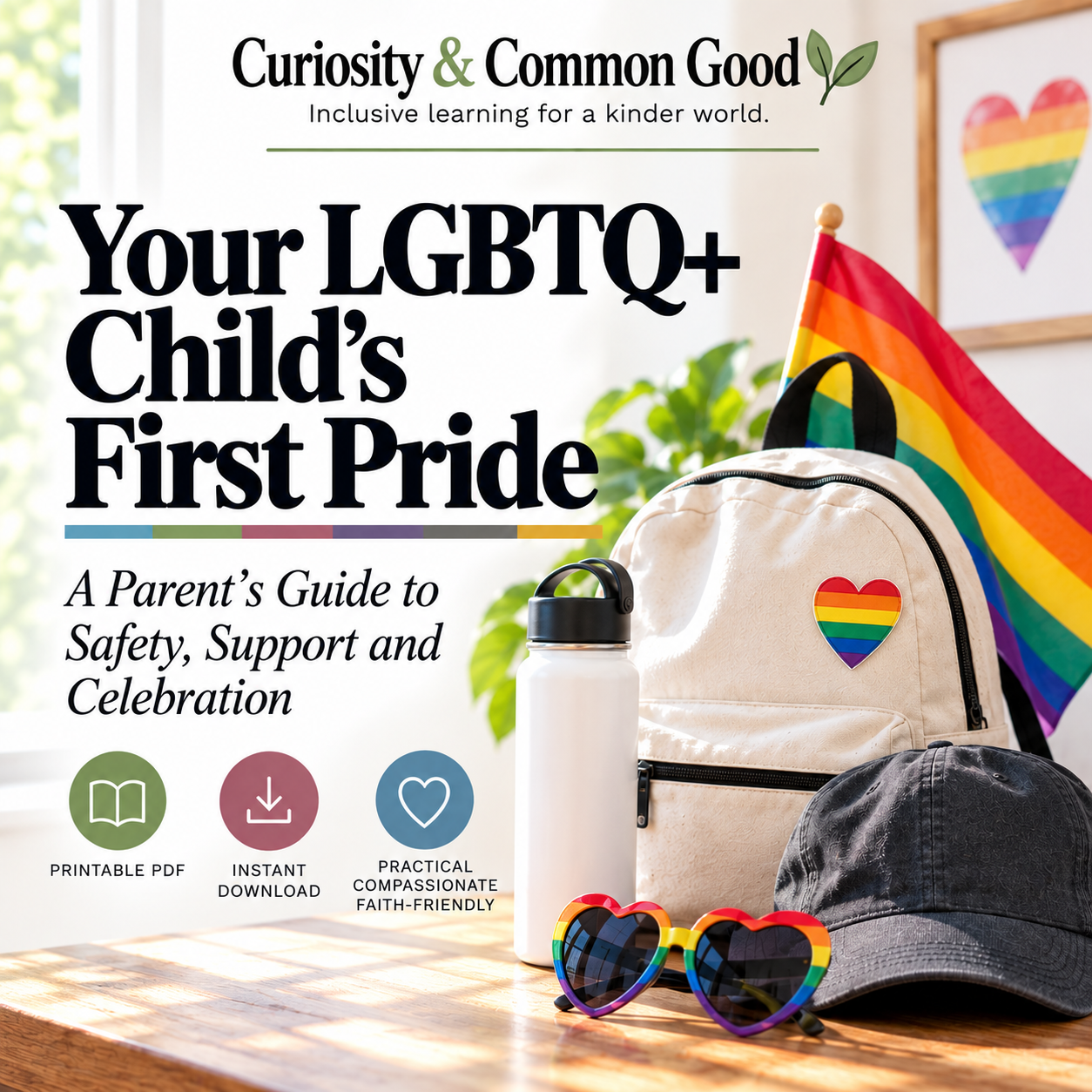
Your LGBTQ+ Child’s First Pride
A Parent & Caregiver Guide to Safety, Support & Celebration
Your child’s first Pride can be exciting, meaningful, emotional—and sometimes a little overwhelming for both kids and parents.
This practical, affirming guide helps parents and caregivers prepare for Pride in a way that centers their child’s comfort, privacy, safety, and joy.
Rather than assuming there is one “right” way to experience Pride, the guide helps families talk together about what their child actually wants from the day.
Inside you’ll find guidance for choosing an age-appropriate Pride event, letting your child lead, making a simple safety plan, protecting privacy and avoiding accidental outing, navigating photos and social media, preparing for crowds and sensory needs, talking about flags and self-expression, responding to protesters, discussing faith and Pride, and knowing when it’s perfectly okay to leave.
The guide also includes conversation starters, practical packing suggestions, questions for after the event, and a printable First Pride Planner families can complete together.
Pride can be more than an event. For an LGBTQ+ young person, it can be a chance to discover that the world is much bigger than the places where they may have felt different—and that there are communities where they can belong fully.
Printable PDF • Instant digital download • Parent & caregiver resource • LGBTQ+ affirming • Pride resource • Practical & compassionate • Faith-friendly
Curiosity & Common Good
Inclusive learning for a kinder world.
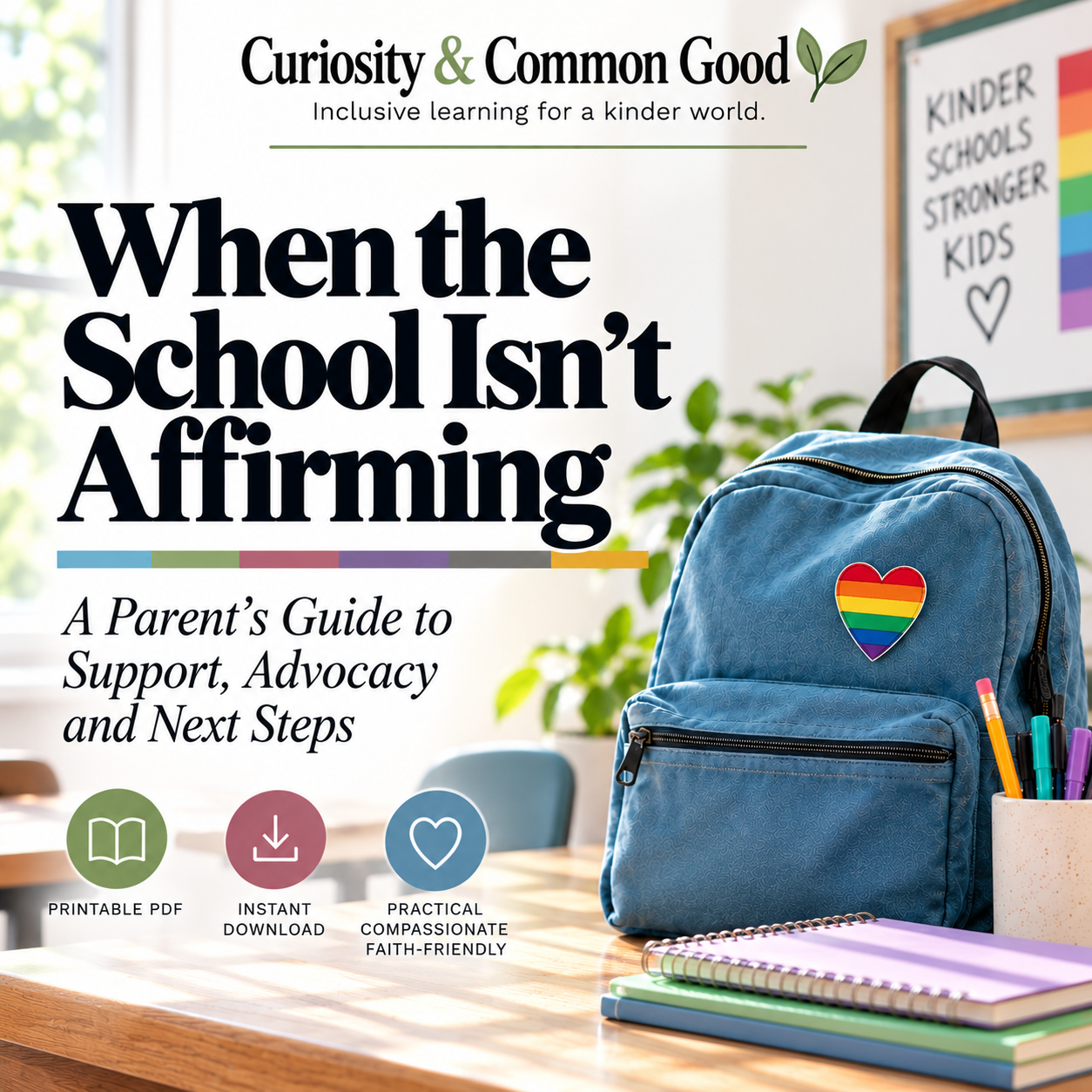
When the School Isn’t Affirming
A Parent & Caregiver Guide to Support, Advocacy & Next Steps
What do you do when your LGBTQ+ child has to spend every day in a school that doesn’t fully affirm who they are?
Sometimes the problem is obvious—bullying, harassment, discriminatory treatment, or a hostile adult. Other times it is harder to name: repeated comments, misgendering, exclusion, unsafe policies, silence from adults, or the constant feeling that your child has to make themselves smaller to get through the school day.
When the School Isn’t Affirming gives parents and caregivers practical tools for responding without making their child navigate the system alone.
Inside you’ll find guidance for:
Listening to your child before taking action
Identifying exactly where the problem is happening
Deciding what needs immediate attention
Finding affirming adults inside an unaffirming school
Creating a practical school-day safety net
Documenting incidents and patterns
Responding when a teacher or staff member is the problem
Handling administrators who minimize concerns
Navigating names, pronouns, privacy, and unwanted outing
Knowing when and how to escalate a concern
Building an affirming community outside school
Considering whether changing schools may be appropriate
Helping your child understand that their school is not the whole world
The guide also includes sample language for parents, questions to use in school meetings, practical advocacy strategies, a printable School Response Planner, and affirming words your child may need to hear from you along the way.
You may not be able to transform an entire school culture overnight. But you can make sure your child knows they are believed, supported, protected, and never expected to face it alone.
Printable PDF • Instant digital download • LGBTQ+ affirming • Parent & caregiver resource • School advocacy • Practical & compassionate • Faith-friendly
Curiosity & Common Good
Inclusive learning for a kinder world.