 Image 1 of 1
Setting a boundary can be hard—especially when you’re still figuring out who you are, what feels comfortable, and how much of yourself you want to share.
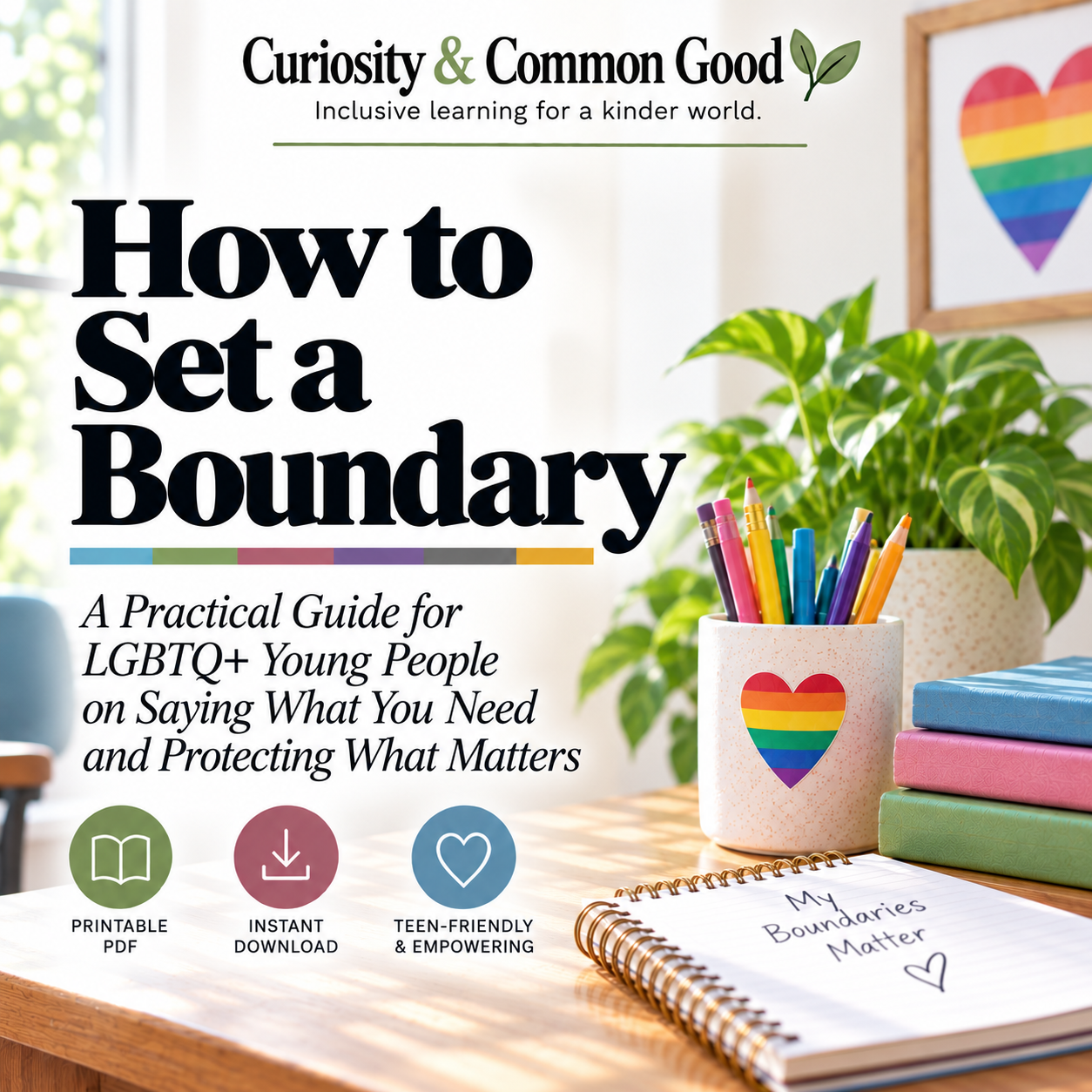
How to Set a Boundary is a practical, affirming guide written directly for LGBTQ+ young people. It’s designed for a parent or caregiver to give to a child or teen who needs help finding the words to protect their privacy, identity, relationships, and emotional space.
This guide helps young people understand that a boundary isn’t about being rude, difficult, or controlling someone else. It’s about recognizing what they need and learning how to communicate it clearly.
Inside the guide:
What a boundary actually is
Understanding privacy and what you never owe someone
A simple three-part formula for setting a boundary
Short phrases to use when you don’t know what to say
Boundaries with parents and family
Boundaries with friends
Boundaries at school
Social media and online boundaries
What to do when someone keeps pushing
The difference between boundaries and controlling behavior
What to do when setting a boundary doesn’t feel safe
A printable Build Your Boundary worksheet
Ready-to-use scripts for coming out, privacy, names and pronouns, jokes, faith, dating, social media, and more
Young people will find practical phrases such as “That’s private,” “Please don’t tell anyone else,” “I’m not ready to talk about that,” and “I’m ending this conversation now”—along with guidance for deciding when to ask a trusted adult for help.
Most importantly, this resource reminds LGBTQ+ young people that kindness does not require giving everyone unlimited access to their time, body, identity, relationships, or private life.
Part of the People & Belonging collection from Curiosity & Common Good.
Printable PDF • Instant digital download • LGBTQ+ affirming • Teen-friendly • Parent-to-child resource
Setting a boundary can be hard—especially when you’re still figuring out who you are, what feels comfortable, and how much of yourself you want to share.
How to Set a Boundary is a practical, affirming guide written directly for LGBTQ+ young people. It’s designed for a parent or caregiver to give to a child or teen who needs help finding the words to protect their privacy, identity, relationships, and emotional space.
This guide helps young people understand that a boundary isn’t about being rude, difficult, or controlling someone else. It’s about recognizing what they need and learning how to communicate it clearly.
Inside the guide:
What a boundary actually is
Understanding privacy and what you never owe someone
A simple three-part formula for setting a boundary
Short phrases to use when you don’t know what to say
Boundaries with parents and family
Boundaries with friends
Boundaries at school
Social media and online boundaries
What to do when someone keeps pushing
The difference between boundaries and controlling behavior
What to do when setting a boundary doesn’t feel safe
A printable Build Your Boundary worksheet
Ready-to-use scripts for coming out, privacy, names and pronouns, jokes, faith, dating, social media, and more
Young people will find practical phrases such as “That’s private,” “Please don’t tell anyone else,” “I’m not ready to talk about that,” and “I’m ending this conversation now”—along with guidance for deciding when to ask a trusted adult for help.
Most importantly, this resource reminds LGBTQ+ young people that kindness does not require giving everyone unlimited access to their time, body, identity, relationships, or private life.
Part of the People & Belonging collection from Curiosity & Common Good.
Printable PDF • Instant digital download • LGBTQ+ affirming • Teen-friendly • Parent-to-child resource