 Image 1 of 1
What does it mean to be named, known, and recognized as yourself?
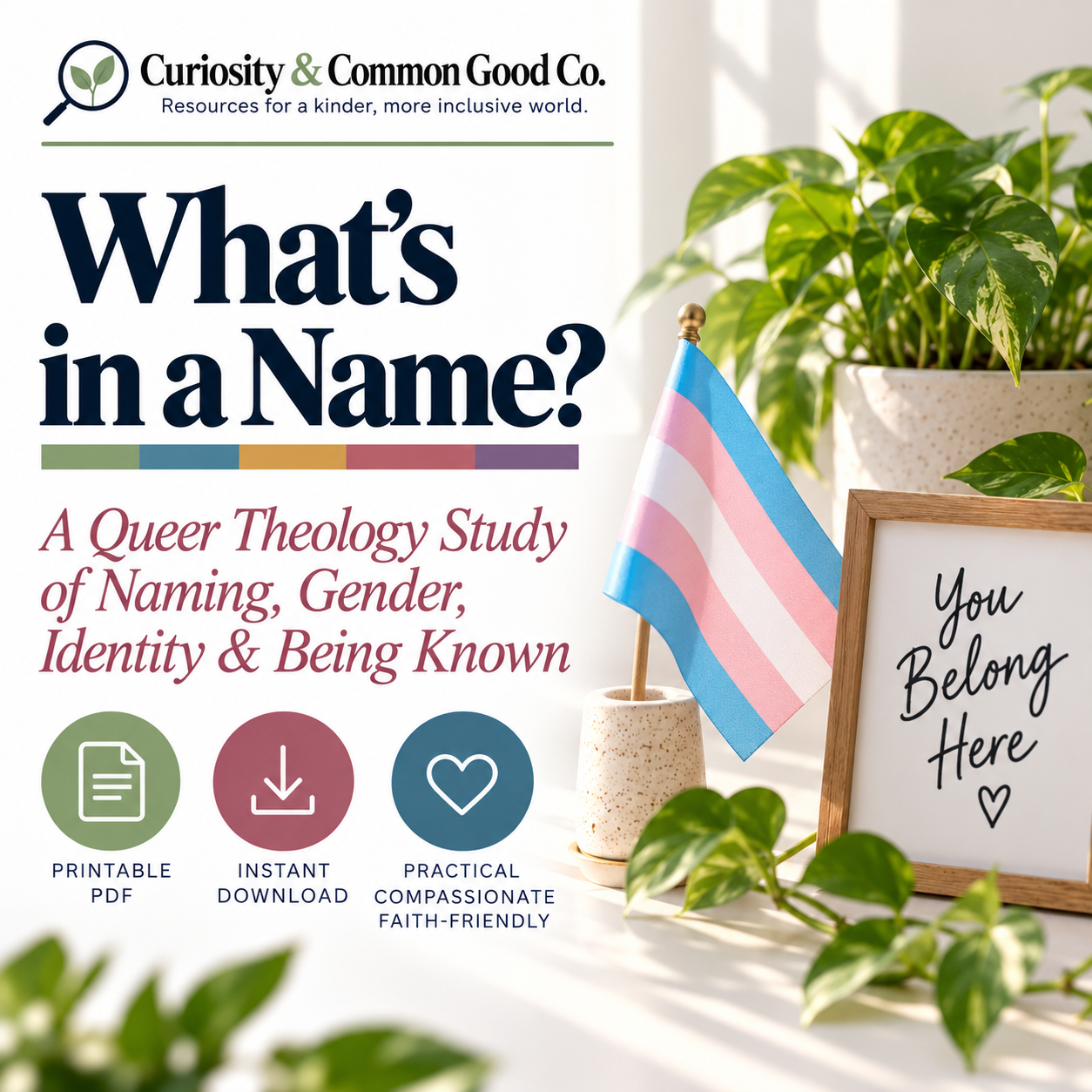
What’s in a Name? is an accessible queer theology study exploring biblical and Jewish texts about names, identity, gender, embodiment, transformation, and recognition. Written for readers both inside and outside religious communities, it requires no previous Bible knowledge. Each biblical story is retold in clear, easy-to-follow language before moving into historical context and queer theological reflection.
The study explores stories including Abraham and Sarah, Jacob/Israel, Hadassah/Esther, Simon/Peter, Saul/Paul, Hagar, and Mary Magdalene, asking what these ancient stories can open up when read alongside the experiences of transgender and nonbinary people.
It also introduces rabbinic Jewish discussions of zachar, nekevah, androgynos, tumtum, aylonit, and saris, exploring the long history of bodies and gendered lives that complicate a simple binary.
Throughout the resource, you’ll find Hebrew and Greek words, historical and cultural context, substantial Queering the Text sections, and personal reflection questions centered on self-knowledge rather than having to defend or prove who you are.
Topics include chosen names, deadnaming, pronouns, transition, gender expression, changing identities, multiple names, privacy and disclosure, bodily autonomy, being seen, self-trust, and finding the sacred in becoming more fully yourself.
Individual reflection, queer and trans spiritual exploration, LGBTQ+ groups, progressive Bible studies, classrooms, small groups, clergy and faith leaders, or anyone curious about queer approaches to scripture.
Digital PDF • 12-point readable body text • No previous Bible knowledge required
This is not a resource asking queer and trans people to justify their existence through scripture. It is an invitation to encounter ancient texts with curiosity and to consider a deeply personal question:
What might change if you trusted yourself to name who you are without first proving it to anyone else?
What does it mean to be named, known, and recognized as yourself?
What’s in a Name? is an accessible queer theology study exploring biblical and Jewish texts about names, identity, gender, embodiment, transformation, and recognition. Written for readers both inside and outside religious communities, it requires no previous Bible knowledge. Each biblical story is retold in clear, easy-to-follow language before moving into historical context and queer theological reflection.
The study explores stories including Abraham and Sarah, Jacob/Israel, Hadassah/Esther, Simon/Peter, Saul/Paul, Hagar, and Mary Magdalene, asking what these ancient stories can open up when read alongside the experiences of transgender and nonbinary people.
It also introduces rabbinic Jewish discussions of zachar, nekevah, androgynos, tumtum, aylonit, and saris, exploring the long history of bodies and gendered lives that complicate a simple binary.
Throughout the resource, you’ll find Hebrew and Greek words, historical and cultural context, substantial Queering the Text sections, and personal reflection questions centered on self-knowledge rather than having to defend or prove who you are.
Topics include chosen names, deadnaming, pronouns, transition, gender expression, changing identities, multiple names, privacy and disclosure, bodily autonomy, being seen, self-trust, and finding the sacred in becoming more fully yourself.
Individual reflection, queer and trans spiritual exploration, LGBTQ+ groups, progressive Bible studies, classrooms, small groups, clergy and faith leaders, or anyone curious about queer approaches to scripture.
Digital PDF • 12-point readable body text • No previous Bible knowledge required
This is not a resource asking queer and trans people to justify their existence through scripture. It is an invitation to encounter ancient texts with curiosity and to consider a deeply personal question:
What might change if you trusted yourself to name who you are without first proving it to anyone else?