 Image 1 of 1
Modern Retellings, Historical Context & Queer Theological Reflections
What happens when we read Jesus’ parables from the margins?
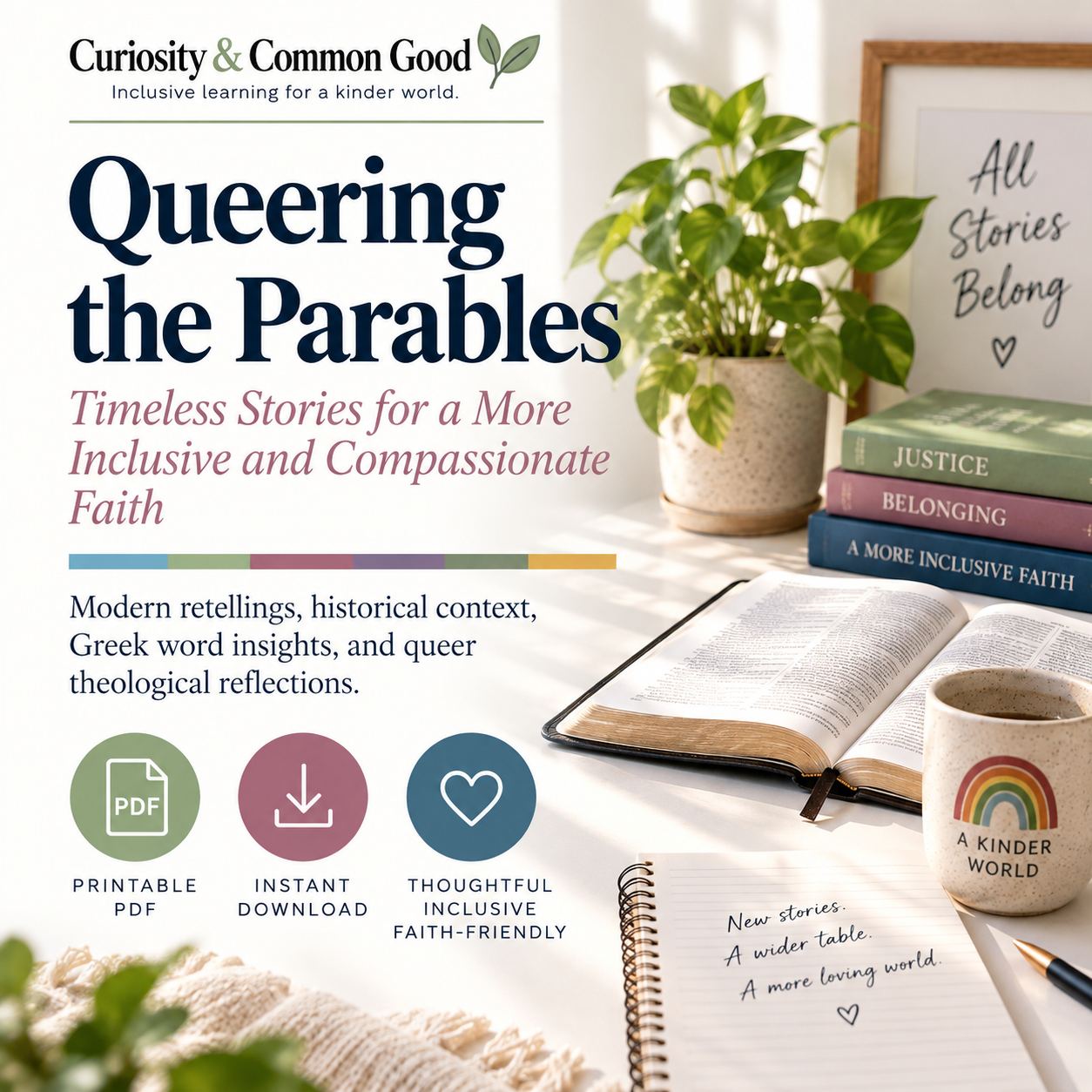
Queering the Parables is a progressive Christian Bible study resource that returns to familiar stories with fresh questions about belonging, power, exclusion, identity, community, and grace. Rather than treating queer theology as something added onto Scripture, this resource asks what becomes visible when LGBTQ+ lives and experiences are welcomed into the conversation.
Each parable is presented as a two-page study designed to be accessible enough for individual reflection while offering enough depth for small groups, adult Sunday school, progressive Bible studies, and affirming congregations.
Each study includes:
A clear modern retelling of the parable
Historical and cultural context that helps readers understand the world behind the story
A Greek Word to Know, with transliteration, meaning, and insight into why the word matters
What the Story Disrupts, highlighting boundaries, assumptions, and hierarchies challenged by the parable
A Queer Reading that brings LGBTQ+ experience into conversation with the text
A thoughtful reflection question for personal or group discussion
Explore familiar stories including The Good Samaritan, The Lost Sheep, The Great Banquet, The Persistent Widow, The Prodigal Son, The Pharisee & the Tax Collector, The Workers in the Vineyard, and The Mustard Seed.
This resource does not argue that every parable is secretly “about” LGBTQ+ people. Instead, it practices a way of reading Scripture that takes seriously the perspectives of people whose bodies, identities, families, and lives have often been pushed to the margins of Christian interpretation.
Because sometimes the most interesting thing about a familiar story is discovering who we were taught not to see.
Digital Product: Printable PDF • Instant Download
Ideal for: Progressive Christians • LGBTQ+ Christians • Affirming churches • Clergy • Adult Bible study • Small groups • Personal study • Deconstruction and faith reconstruction
Modern Retellings, Historical Context & Queer Theological Reflections
What happens when we read Jesus’ parables from the margins?
Queering the Parables is a progressive Christian Bible study resource that returns to familiar stories with fresh questions about belonging, power, exclusion, identity, community, and grace. Rather than treating queer theology as something added onto Scripture, this resource asks what becomes visible when LGBTQ+ lives and experiences are welcomed into the conversation.
Each parable is presented as a two-page study designed to be accessible enough for individual reflection while offering enough depth for small groups, adult Sunday school, progressive Bible studies, and affirming congregations.
Each study includes:
A clear modern retelling of the parable
Historical and cultural context that helps readers understand the world behind the story
A Greek Word to Know, with transliteration, meaning, and insight into why the word matters
What the Story Disrupts, highlighting boundaries, assumptions, and hierarchies challenged by the parable
A Queer Reading that brings LGBTQ+ experience into conversation with the text
A thoughtful reflection question for personal or group discussion
Explore familiar stories including The Good Samaritan, The Lost Sheep, The Great Banquet, The Persistent Widow, The Prodigal Son, The Pharisee & the Tax Collector, The Workers in the Vineyard, and The Mustard Seed.
This resource does not argue that every parable is secretly “about” LGBTQ+ people. Instead, it practices a way of reading Scripture that takes seriously the perspectives of people whose bodies, identities, families, and lives have often been pushed to the margins of Christian interpretation.
Because sometimes the most interesting thing about a familiar story is discovering who we were taught not to see.
Digital Product: Printable PDF • Instant Download
Ideal for: Progressive Christians • LGBTQ+ Christians • Affirming churches • Clergy • Adult Bible study • Small groups • Personal study • Deconstruction and faith reconstruction