COOP OPERATIONS: 35 ANIMALS MEANS A LOT OF FOOD
It takes a lot more than love to run a farm. It takes feed buckets, water hoses, fence repairs, schedules, tools, teamwork, and two Farm Moms trying to stay one chore ahead of whatever breaks next.
Running a farm takes cooperation. There are jobs that happen once a year, jobs that happen when something breaks, and jobs that happen every single day — whether it's raining, freezing, miserably hot, or the Farm Moms would really like to stay in bed.
Feeding is one of those jobs.
With 35 animals at Rainbow Connection Farm, feeding isn't a matter of walking outside with one big bucket and yelling "Breakfast!" Different animals eat different foods. Some need fresh vegetables added to their meals. Some eat several times a day. And one 34-year-old pony has an entire meal schedule of his own.
Welcome to Coop Operations. Today we're talking about what it takes to keep everybody fed.
5:00 A.M. — THE KITCHEN OPENS
The first customers are the dogs and cats.
At 5:00 every morning, Kelley gets up to feed the animals in the house and start getting food ready for everybody outside — an arrangement that works particularly well because Kelley actually likes waking up early.
Feed gets measured, buckets get prepared, and Harley's food has to be soaked before he can eat it.
By the time most people are considering their first cup of coffee, breakfast service for 35 has already begun.
6:00 A.M. — THE ROOSTER CLOCK
We could tell you that breakfast begins at exactly 6:00.
Technically, breakfast begins when the rooster says it does.
When the rooster crows, the buckets head outside. Mavis and Sugar get senior horse feed. Harley gets his soaked feed. The pigs get pig feed supplemented with leftovers, fresh vegetables, and corn. The ducks get duck feed along with fresh vegetables, and the chickens get their chicken feed.
Same farm. Same feeding time. Very different menus. And everyone knows exactly which bucket belongs to them.
9:00 A.M. — HARLEY EATS AGAIN
Three hours later, Harley gets another soaked bucket.
Harley is 34 years old, and at that age his teeth aren't what they used to be. That means his feeding routine looks different from the other horses': instead of a few larger meals that require more chewing, we prepare soaked food and divide his daily portion into multiple meals.
It adds extra stops to the Farm Moms' day, but that's part of caring for senior animals — the routine changes when they need it to change.
3:00 P.M. — THE GARDEN SNACK RUN
Afternoon means snacks.
When the garden is producing, fresh food makes its way around the farm. What's available changes with the season, so snack time might look a little different from week to week. The garden isn't separate from feeding the farm — what we grow becomes part of the daily routine, providing fresh seasonal treats for animals who can safely eat them.
Harley, meanwhile, gets another soaked bucket. At this point you may be noticing that Harley has figured out retirement remarkably well.
6:00 P.M. — EVERYBODY IN
By evening, Britt is taking over more of the feeding routine — and this is one of those places where having two Farm Moms with completely different internal clocks works in everyone's favor. Kelley likes getting up early. Britt likes staying up late.
At 6:00, Harley gets another soaked meal. The chickens are brought into the coop for the night and get another scoop of chicken food, while the ducks get their evening feed. This feeding also helps with another important farm routine: getting everybody settled where they belong before dark.
Food is an excellent negotiating tool. Especially with chickens.
8:00 P.M. — DINNER AGAIN
At 8:00, the pigs and horses eat again. By now, the farm's feeding day has been going for fifteen hours.
The pigs remain unconvinced that they have eaten at all.
10:00 P.M. — LAST CALL
The day's final bucket belongs to Harley. His soaked feed is prepared one more time, and at 10:00 p.m. our 34-year-old pony gets his last meal of the day.
This is where Britt's preference for staying up late becomes particularly useful. While Kelley is our early-morning Farm Mom, Britt is perfectly happy being the one still making sure everybody is taken care of at the other end of the day.
Then the farm kitchen is officially closed. Until Kelley gets up at 5:00 tomorrow morning.
THE WEIRD PART: FARM FEEDING IS MORE COMPLICATED THAN IT LOOKS
Here's something people don't always realize about feeding farm animals: sometimes water is part of the recipe. Soaking feed can make a meal easier for an older horse with dental problems to manage, and senior animals may need their diets, portions, or feeding schedules adjusted as their bodies change.
Animals can also develop remarkably accurate internal clocks. Anyone who regularly feeds animals at the same time knows what happens when you're late. You may own the clocks, calendars, and watches, but the animals know when dinner is supposed to happen.
Then there are the buckets. Farm buckets look like one of the simplest pieces of equipment we own, but they are everywhere — feed buckets, soaking buckets, water buckets, carrying buckets, cleaning buckets. There are very few problems on a farm that cannot be improved by finding another bucket.
There are also very few things more suspicious to a farm animal than seeing a Farm Mom carrying a bucket that isn't headed toward them.
THE FARM MOMS
If you look at our feeding schedule on paper, it can seem a little ridiculous. 5:00 a.m. to 10:00 p.m. is a very long day.
Thankfully, the Farm Moms have one very useful thing going for them: Kelley likes mornings, and Britt likes nights.
Kelley takes the early shift — up at 5:00 feeding the dogs and cats, preparing buckets, soaking Harley's food, and getting everything ready so that when the rooster announces another farm day, breakfast can head out.
Britt would much rather stay up late than get up at 5:00 in the morning, which works out perfectly, because farm chores don't end when the sun goes down. She takes the later side of the routine, helping get everybody settled for the night and making sure Harley gets that final soaked bucket at 10:00.
It is, appropriately enough, a cooperative operation.
But underneath the schedules, buckets, feed bins, alarms, garden snacks, and rooster announcements is something much simpler.
Running a sanctuary farm isn't about finding the most convenient schedule for the people. It's about figuring out what the animals need — and then figuring out how the Farm Moms can work together to make sure it happens.
Mavis and Sugar are senior horses. Harley is 34 and needs soaked meals throughout the day because of his teeth. The pigs need food appropriate for pigs. The ducks need food appropriate for ducks. The chickens need theirs. The dogs and cats have needs of their own. Seasons change, animals age, gardens grow, bodies change — and sometimes the routine that worked last year isn't the routine somebody needs today.
So Kelley takes the early mornings. Britt takes the late nights. Somewhere in between, they meet in the middle and keep the buckets moving.
Behind every bucket is a very ordinary promise the Farm Moms make to the animals who live here:
You don't have to worry about where your next meal is coming from anymore. One of us will be back with another bucket.
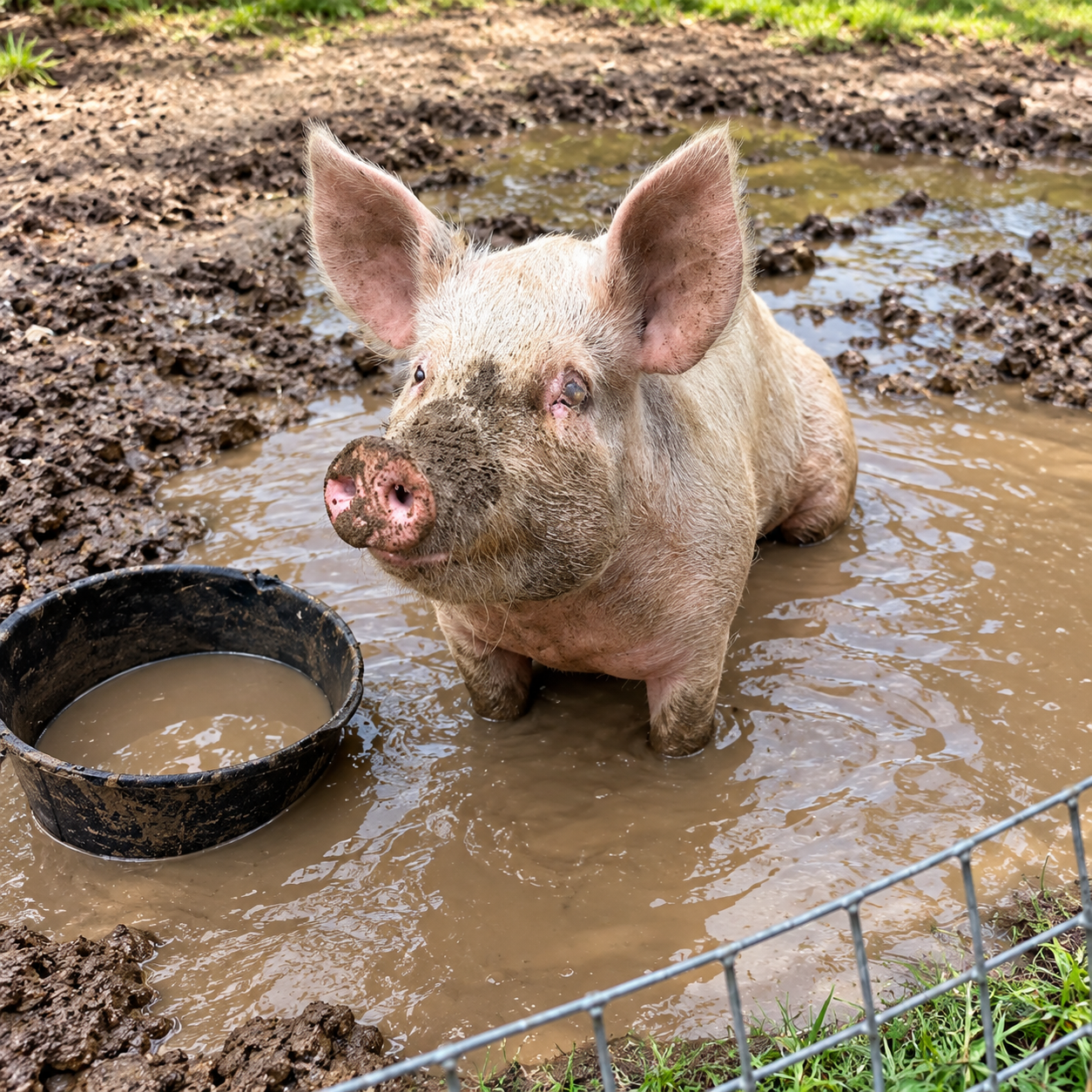
The Mudpit
Mud makes for happy pigs.
