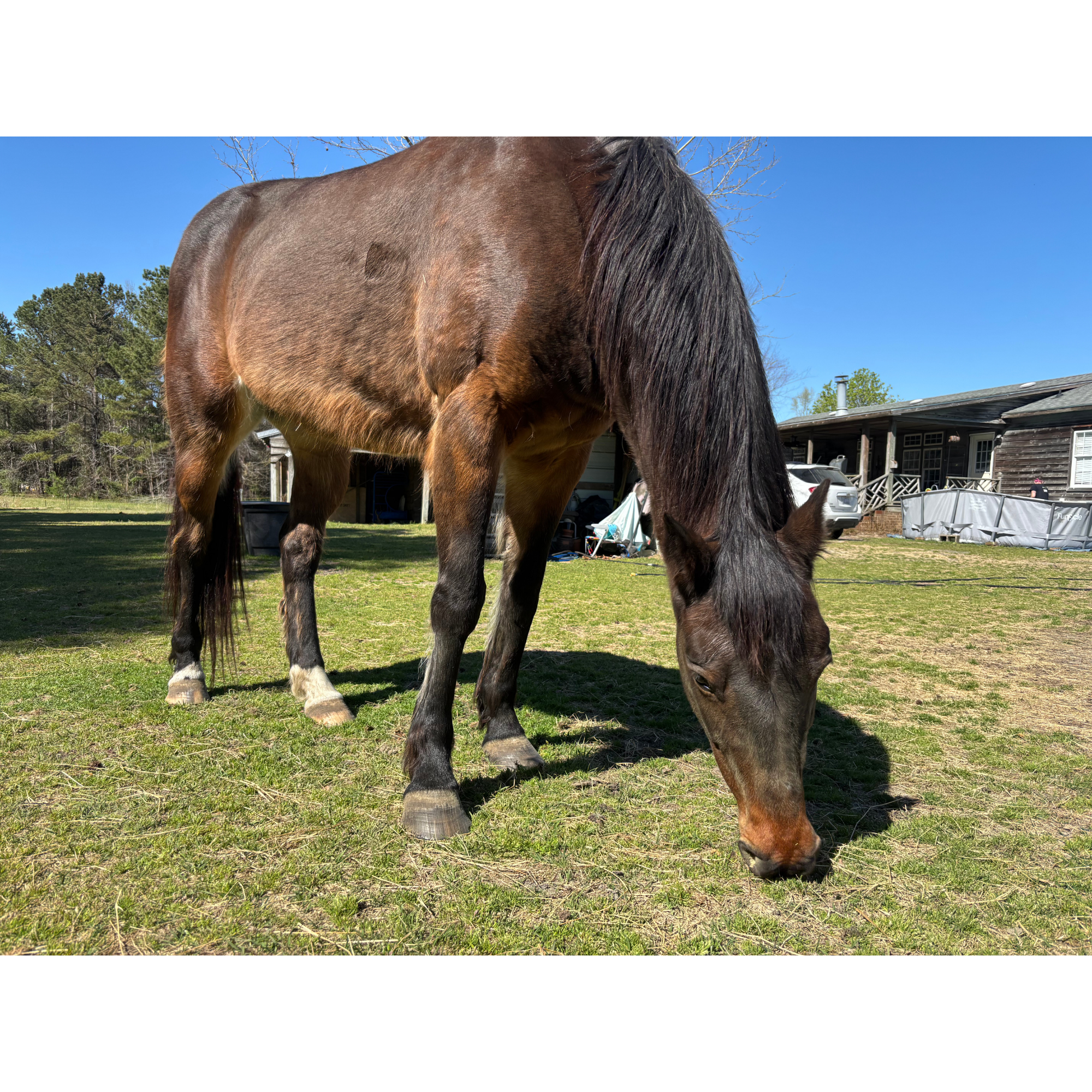
MAVIS SAYS: LET THEM COME TO YOU
First start with a breath…
Take a deep breath.
Breathe in the fresh air.
Breathe out the frustration, stress, and exhaustion.
Welcome to The Pasture.
Mavis — Grounding Correspondent
Lead mare. Keeping everybody’s feet—and feelings—on the ground.
AT THE GATE
A new horse arrives at the farm. Maybe they were neglected, handled roughly, moved from place to place, or simply don't understand where they are yet. The humans know they're safe now. The horse doesn't.
Our first instinct can be to prove it. We want to walk over, pet them, brush them, offer treats, and show them that we're the good people.
Mavis says that's a lot of pressure for somebody who just got here.
Sometimes the kindest welcome is giving them enough space to decide when they're ready to meet you.
WHAT WE’RE DOING: HELPING A RESCUE HORSE FEEL SAFE
Trust isn't something we can explain to a frightened animal. We build it through what happens next.
Food arrives when expected. Water is always available. The pasture is secure. Voices stay calm. Movements are predictable. Nobody chases them around trying to make friends.
Most importantly, the horse gets choices whenever it's safe to give them.
For an animal whose choices may have been taken away in the past, that can matter.
TRY THIS: LET THEM CLOSE THE DISTANCE
Instead of immediately walking toward a nervous horse, give them room. Stand or sit quietly at a safe distance and let them watch you. Keep your movements slow and your voice calm. Don't stare them down or keep reaching for them when they move away.
If they choose to come closer, let them investigate. If they decide they've had enough and move away again, let them.
You aren't trying to accomplish a certain amount of touching today.
You're showing them that being near you doesn't mean losing control of what happens next.
Always follow safe horse-handling practices, and work with an experienced equine professional or veterinarian when a horse's history, fear, or behavior creates safety concerns.
WHERE DOES THIS COME FROM?
Modern animal behavior and low-stress handling approaches emphasize paying attention to an animal's body language, reducing unnecessary pressure, and using gradual, predictable interactions rather than overwhelming an animal with forced contact. With horses, this is especially important because they're prey animals whose natural response to perceived danger may be to move away. Giving a frightened horse appropriate space doesn't mean ignoring them. It means creating repeated experiences in which the horse discovers that the humans around them are predictable and safe.
FROM THE HORSE’S MOUTH
Mavis knows something about second chances. Before she became the lead mare quietly keeping an eye on everyone in our pasture, she came from abuse. When she first appeared in our pasture, she had a reputation for bucking people off and had plenty of reasons not to assume that humans were trustworthy.
Today, Britt can ride Mavis bareback. But that relationship wasn't created by somebody walking into the pasture and announcing, "I'm nice. Trust me." Trust came through what happened day after day.
Mavis also reminds us that there's a difference between an animal tolerating something and an animal feeling safe. Standing still doesn't always mean comfortable. Allowing a touch doesn't necessarily mean wanting another one. We have to pay attention to what the animal is telling us.
Mavis's rule is:
Don't tell them you're safe. Show them—and give them time to believe you.
We've been told this also works with humans.
Again, that's outside our primary area of expertise.
We mostly deal with animals.
THE PASTURE
Ground with Mavis. Pamper with Sugar. Relax with Harley.
#ThePasture #MavisSays #GroundWithMavis #RescueHorse #RainbowConnectionFarm