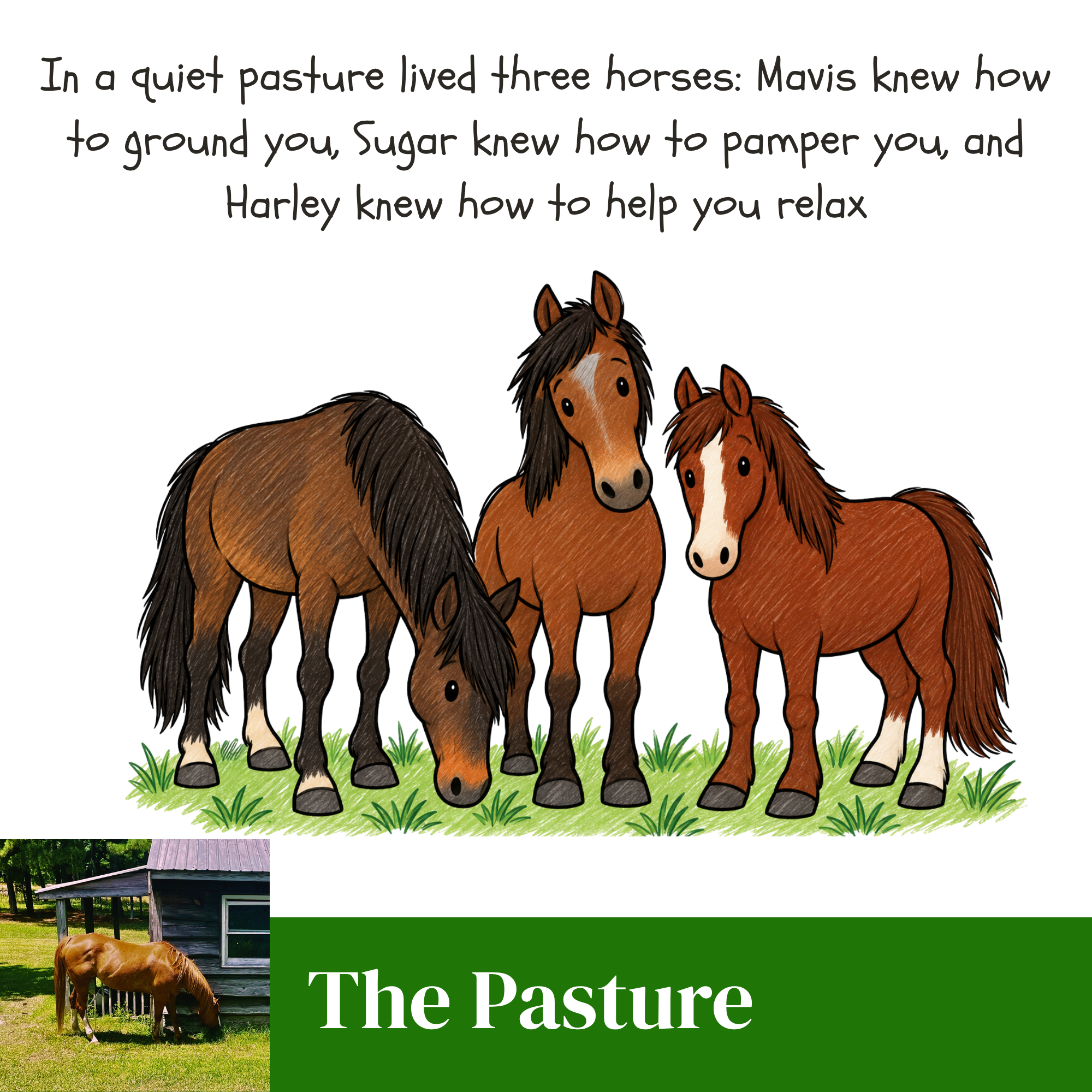
Welcome to the Pasture
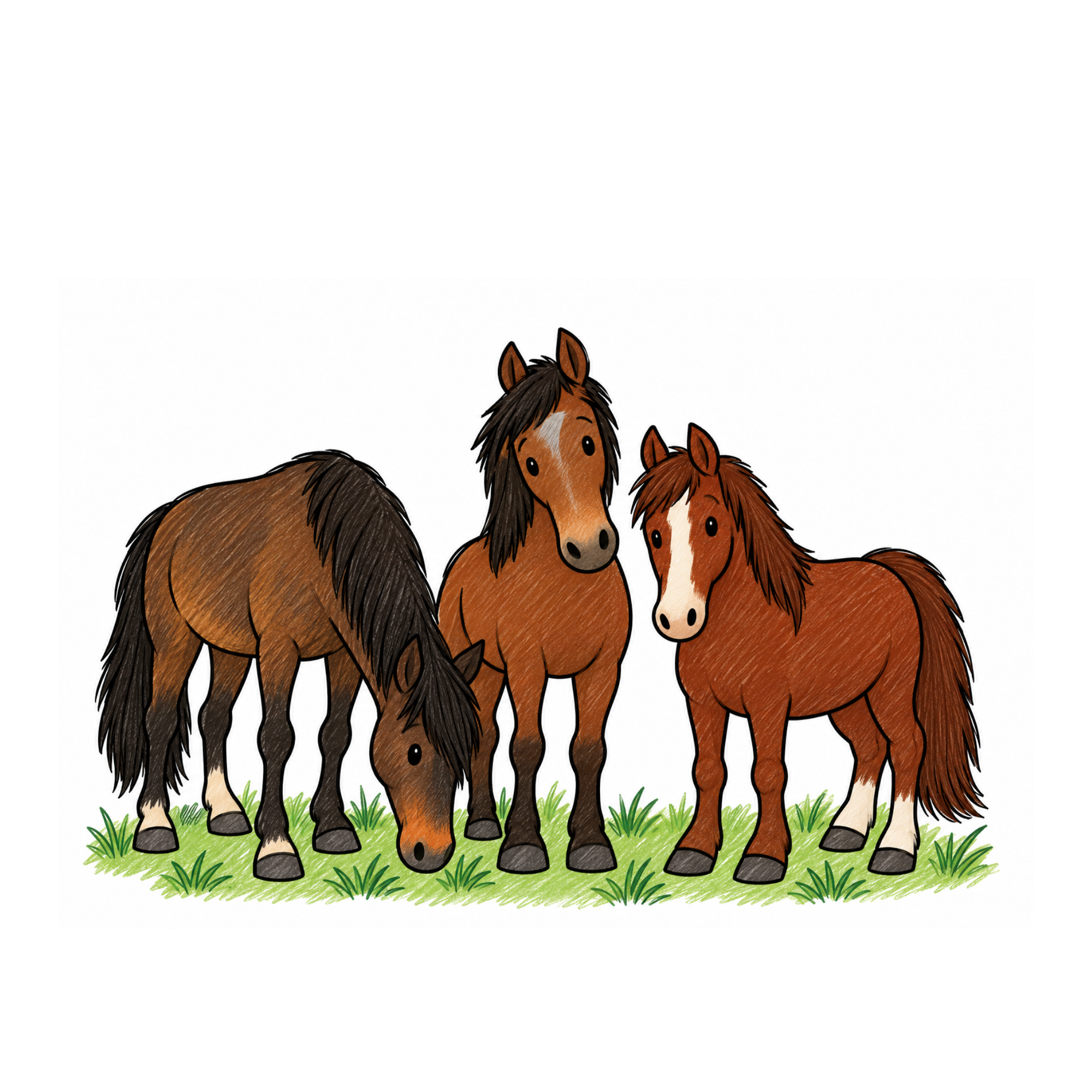
The Pasture is where we go when the world feels a little too loud. Mavis helps us get grounded, Sugar reminds us that it’s okay to be pampered, and Harley teaches us how to slow down and relax. Come spend a little time with the horses—you can stay as long as you need.
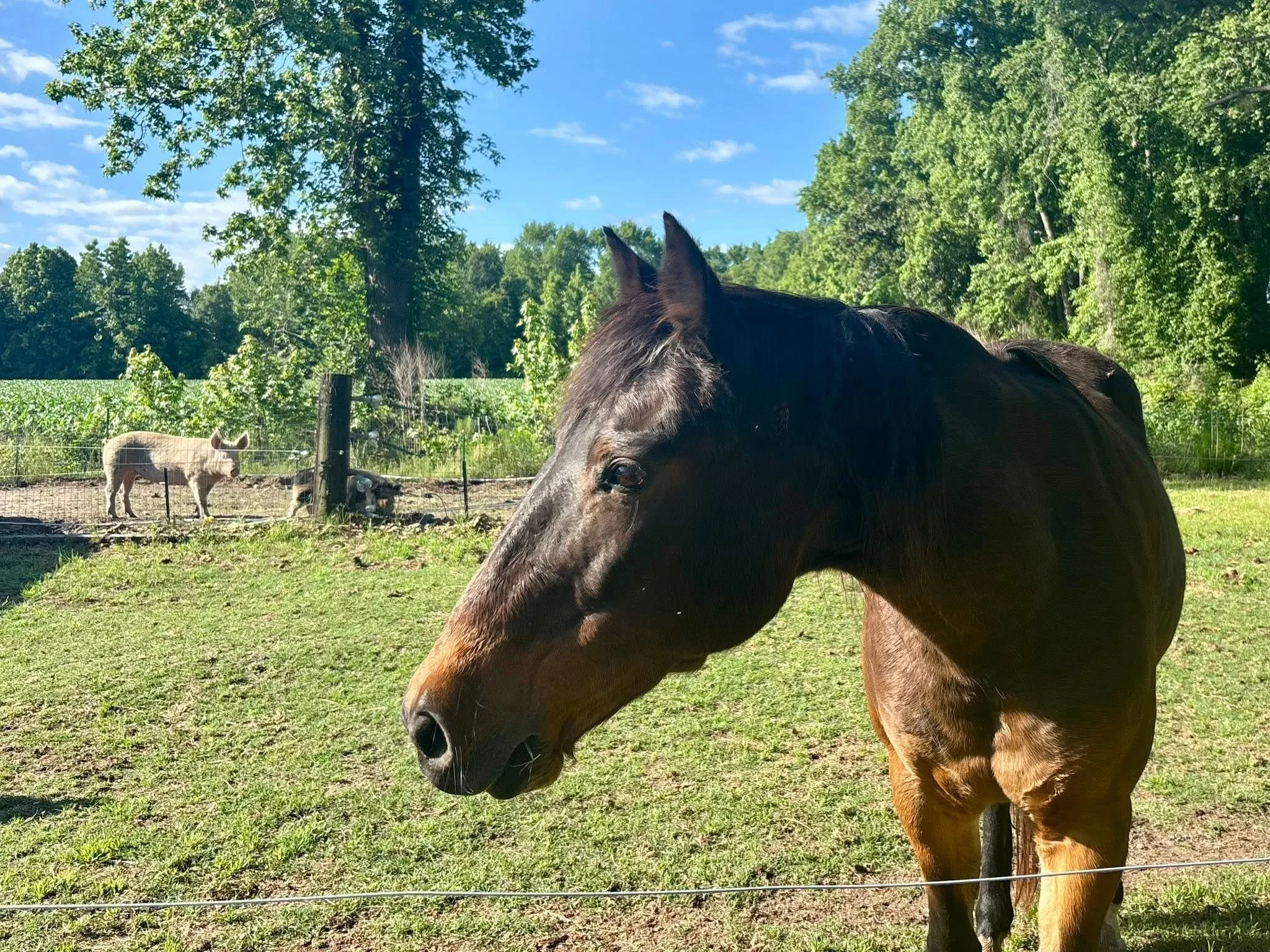
Mavis
Mavis came from an abusive situation and found her way to us by literally breaking into our pasture. She had learned to protect herself and was known for bucking people off. With time, patience, and Britt’s care, Mavis learned that people could be safe again. Today Britt rides her bareback, and Mavis is the pasture’s confident lead mare, watching over the others and helping guide Sugar. Grounding is her specialty: slow down, feel where you are, and find your footing.
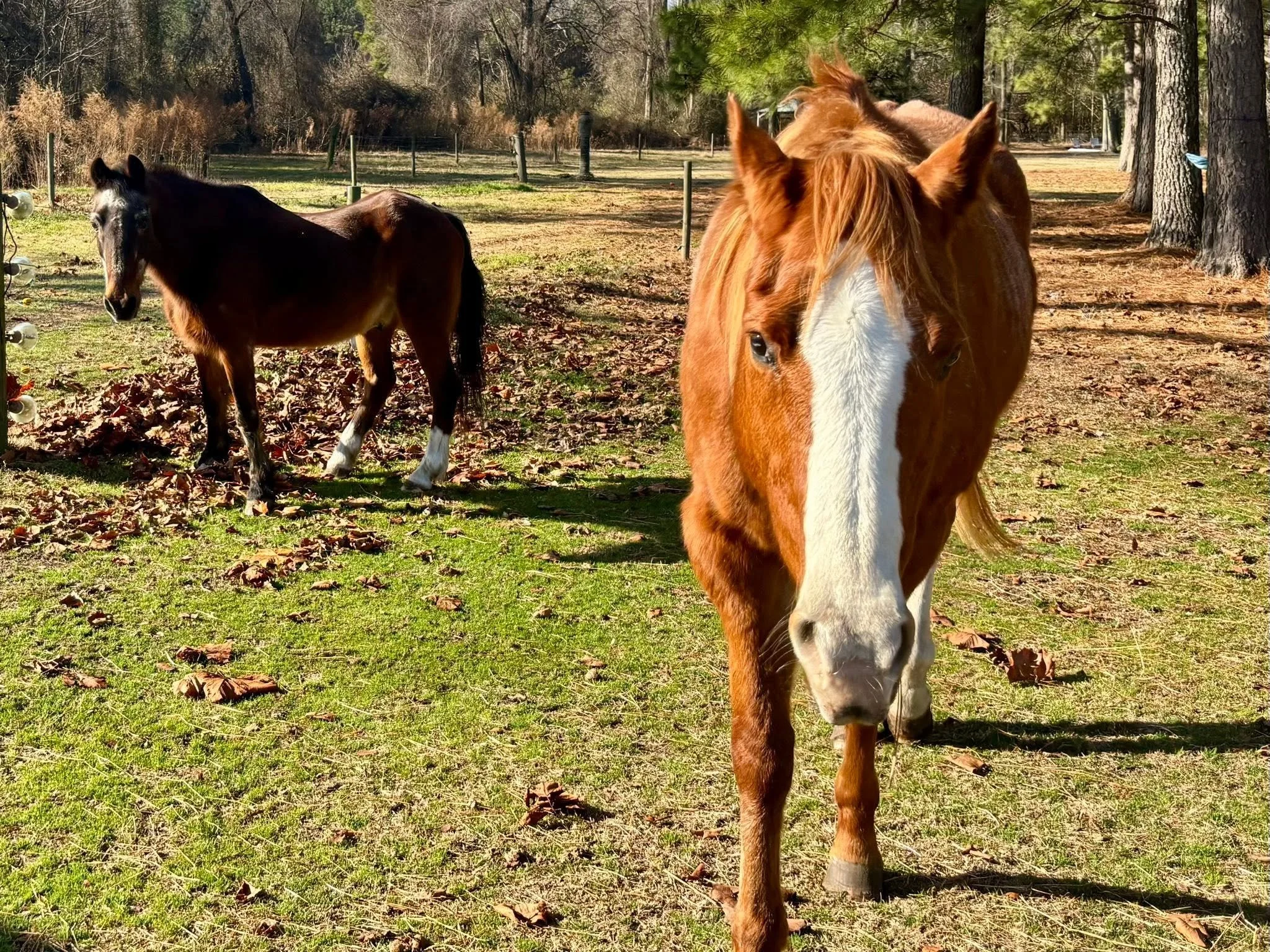
Sugar
Sugar was pulled from a kill pen after suffering injuries that had gone without proper care. A kick from another horse left her partially blind, and an injured, swollen leg had worsened because she continued to be ridden. She spent a year recovering before eventually making the journey from South Carolina to our farm. Today Sugar gets the gentleness and attention she deserves. Pampering is her specialty: accepting care, enjoying a little comfort, and remembering that rest is important too.
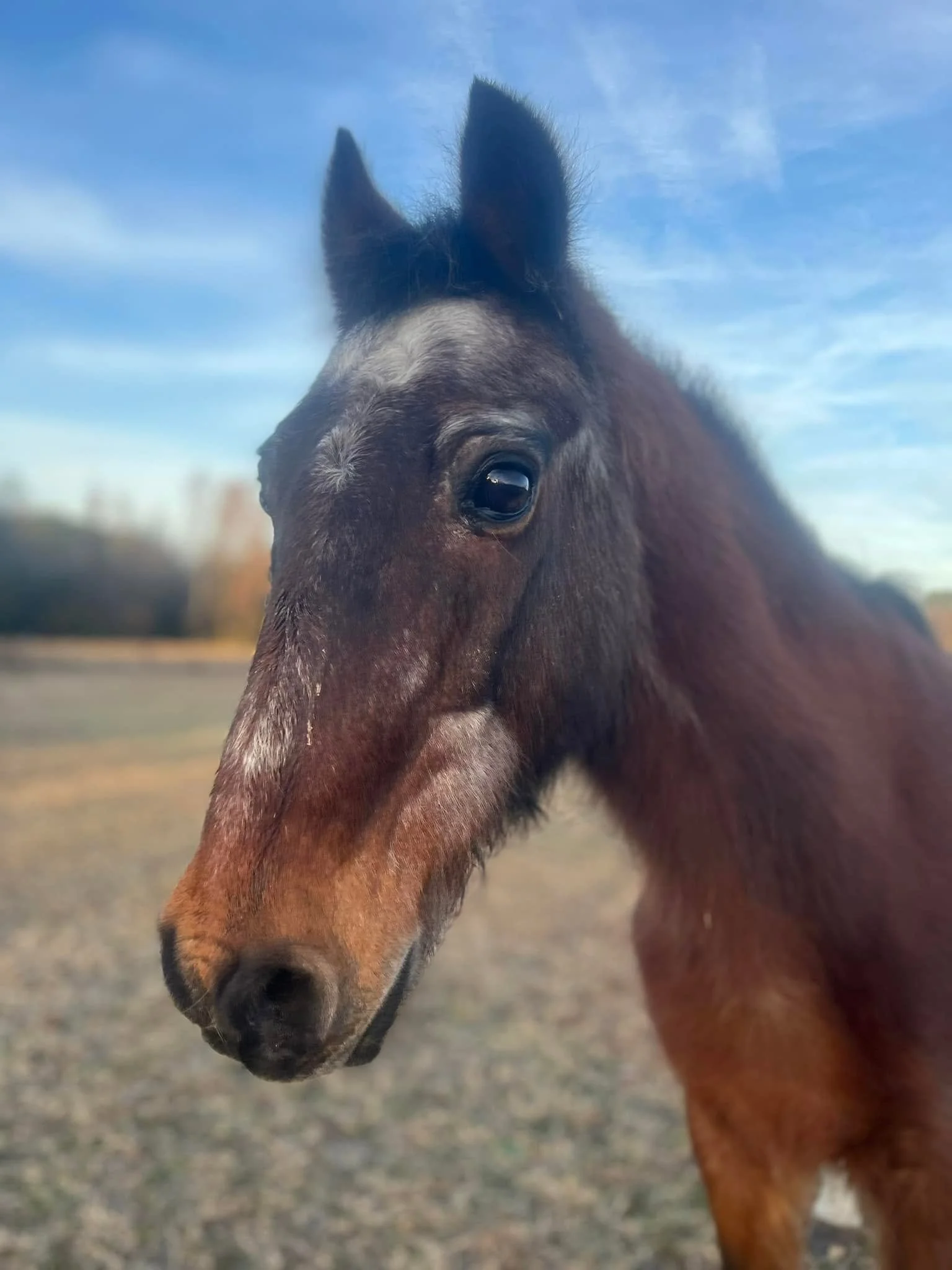
Harley
Harley was a feisty little Hackney pony when Britt adopted him at 16. She trained him, and together they went on to become world champions in the Hackney pony world. Eventually Britt gave Harley something every hardworking horse deserves: retirement. Now 34 years old, his days of competition are behind him, and life is allowed to move at Harley’s pace. Relaxing is his specialty: breathe, slow down, get comfortable, and discover there’s nowhere you have to hurry off to
CARE & FEEDING OF HORSES
Before You Adopt a Horse
Bringing home a horse is a much bigger commitment than finding a pasture and buying a bag of feed. Horses can live for 25–30 years or longer, and adopting one means planning for decades of daily care, changing needs, and unexpected expenses.
FOOD & WATER
Horses need constant access to fresh water and a diet built primarily around forage such as grass and hay. Their nutritional needs vary with age, size, activity, dental health, and medical conditions. Pastures also need to be safely managed—not every green plant is safe for a horse to eat.
HOME
A horse needs secure fencing, adequate space, shelter from weather, dry areas to stand and rest, and safe places to eat and drink. Fences, gates, barns, and pastures require regular inspection and repair. Horses are remarkably talented at finding the one broken board you haven't noticed yet.
HEALTH
Routine care includes veterinary visits, vaccinations, parasite management, dental care, and regular hoof care from a qualified farrier. Older horses and horses with disabilities or previous injuries may require additional medications, special diets, or more frequent veterinary attention.
FRIENDS & ENRICHMENT
Horses are social animals. A beautiful pasture isn't enough if a horse spends life isolated. They need companionship, opportunities to move and graze, and an environment where they can behave like horses.
BEFORE YOU ADOPT
Think beyond the purchase or adoption fee. Consider the ongoing cost of hay, feed, bedding, farrier visits, veterinary care, dental care, fencing, pasture maintenance, shelter, equipment, and emergencies. You also need reliable people who can care for your horse when you cannot.
And remember: a horse does not have to be rideable to have value. Age, injury, disability, or retirement doesn't make a horse disposable.
THE PART OLD MACDONALD LEFT OUT
The horse is often the least expensive part of owning a horse.
The real commitment comes afterward—morning feedings, water buckets, muddy winters, broken fences, farrier appointments, veterinary emergencies, aging bodies, and showing up every single day.
Adopting a horse isn't choosing what the horse can do for you. It's choosing to care for them for who they are.
HARLEY SAYS: YOU’VE DONE ENOUGH
The Pasture is a weekly Rainbow Connection Farm series featuring rescued horses Mavis, Sugar, and Harley, with simple grounding exercises, relaxation practices, self-care, and gentle reminders inspired by life on a small animal sanctuary farm.